
How to Stop Hair Loss by Treating the Scalp
Learning how to stop hair loss starts with a more precise question: what has changed in the biology around the follicle?
HAAR Editorial
The HAAR editorial team — collective voice of our scalp longevity research.
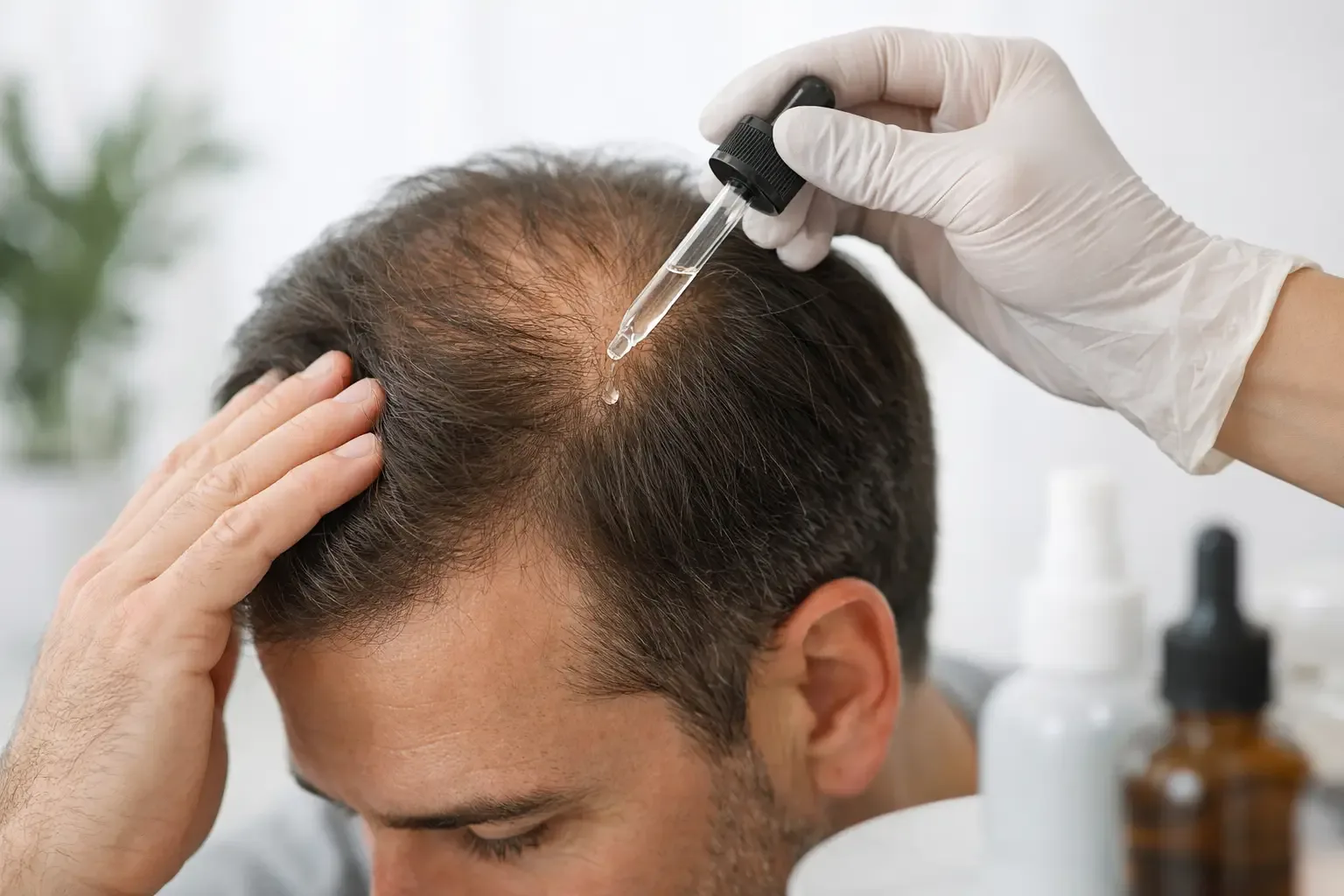
Hair loss rarely begins with the hair itself. It often begins earlier, beneath the surface, when the scalp’s environment becomes less supportive of consistent growth. Learning how to stop hair loss starts with a more precise question: what has changed in the biology around the follicle?
A crowded work calendar, disrupted sleep, illness, dietary restriction, hormonal shifts, pollution, heat, and product buildup can all affect the scalp differently. The goal is not to chase a single miracle product. It is to identify the drivers, protect the follicles still producing hair, and create the conditions for healthier growth over time.
How to Stop Hair Loss Starts With the Cause
Hair shedding and hair thinning are related, but they are not identical. Shedding refers to hairs leaving the follicle, often more noticeably than usual. Thinning describes a gradual reduction in density or strand diameter. Both deserve attention, especially when the change persists.
A person may notice more hair in the shower after a high-stress period, fever, surgery, rapid weight loss, or a major life change. This pattern can be temporary. The hair cycle is sensitive to systemic stress, and increased shedding may appear several months after the trigger itself.
A widening part, reduced volume at the crown, receding temples, or finer hairs around the hairline can signal a different process. Genetic sensitivity to hormones plays a role for many people. Age-related changes, inflammation, and reduced follicle activity can compound it.
The scalp is the common ground. Excess oil, persistent flakes, irritation, microbial imbalance, product residue, and impaired barrier function may not be the sole cause of hair loss, but they can create conditions that make growth less resilient. What is invisible often matters first.
Read the Signals Before Choosing a Treatment
A scalp assessment should consider more than whether hair feels dry or oily. It should examine density patterns, follicle visibility, scalp oil levels, flaking, sensitivity, redness, buildup, and the condition of emerging hair. It should also account for changes in health, medication, diet, and lifestyle.
This is where generic routines fall short. A clarifying treatment may help someone managing heavy buildup, yet be too aggressive for a dry, reactive scalp. Rich oils may make lengths feel softer while worsening congestion near the follicle for another person. More product is not necessarily more care.
Pay attention to timing. Sudden diffuse shedding after illness or stress calls for a different response than a slow, patterned change in density. Itching, tenderness, burning, thick scale, or sharply defined patches of hair loss should not be treated as ordinary cosmetic concerns. These signs warrant evaluation by a dermatologist or qualified medical professional.
The same applies when hair loss is rapid, when eyebrows or body hair are affected, or when shedding comes with fatigue, unexpected weight change, irregular periods, or other health symptoms. Iron deficiency, thyroid conditions, autoimmune disease, nutritional deficiencies, and medication effects can all contribute. Scalp care can support the environment for growth, but it should not replace medical assessment when the pattern suggests an underlying condition.
Build a Scalp-First Routine
Consistency matters more than intensity. A well-designed routine should cleanse without destabilizing the barrier, regulate excess oil and buildup when needed, and support a healthy scalp environment between treatments.
Start with cleansing frequency that matches your scalp, not a fixed rule. If your scalp becomes oily, itchy, or coated quickly, leaving it unwashed for long periods may allow buildup to accumulate around follicles. If it is dry, tight, or easily irritated, overly frequent or harsh cleansing can worsen discomfort. The right cadence is the one that leaves the scalp clean, balanced, and comfortable.
Technique matters as much as formula. Apply shampoo directly to the scalp rather than concentrating it on the lengths. Use the pads of your fingers, not your nails, to lift oil and residue gently. Rinse thoroughly. Conditioner belongs primarily through the mid-lengths and ends unless it is specifically designed for scalp use.
Targeted scalp treatments can be useful when selected for a clear reason. Regulation-focused formulas may help address oiliness and visible flaking. Soothing treatments can support a reactive scalp. Renewal-focused exfoliation may help manage persistent buildup, but it should be used with restraint. Over-exfoliating a compromised scalp can amplify irritation rather than resolve it.
Avoid treating every concern at once. If the scalp is inflamed, prioritize calming and barrier support before introducing multiple active treatments. If buildup is the dominant issue, address that first and reassess. The scalp is responsive, not static. Its needs may change with humidity, travel, stress, exercise, seasonal shifts, and hormonal transitions.
Support the Hair Growth Cycle From Within
Healthy hair growth requires adequate energy and nutrients. Restrictive dieting, low protein intake, and rapid weight loss can shift more follicles into a resting phase. A balanced diet with sufficient protein, iron-rich foods, zinc, vitamin D, and other essential nutrients supports overall hair biology, but supplements are not a universal answer.
Taking high-dose supplements without evidence of a deficiency can be unhelpful and, in some cases, counterproductive. If shedding is persistent or substantial, a clinician can help determine whether blood tests are appropriate before you add anything to your routine.
Stress management is not a cosmetic recommendation. Chronic stress can affect sleep, inflammation, behavior, and the hair cycle itself. It does not mean stress is the only explanation for hair loss. It means recovery should account for the whole system. Better sleep regularity, adequate meals, realistic training loads, and moments of decompression are practical forms of growth support.
Be equally thoughtful about styling. Frequent tight ponytails, braids, extensions, and styles that create sustained tension can damage hair and stress follicles over time. High heat, repeated bleaching, and aggressive brushing may not cause follicle-based hair loss on their own, but they can cause breakage that makes density look worse. Reduce tension. Use heat deliberately. Handle wet hair with care.
Consider Evidence-Based Medical Options
When genetic or pattern hair loss is involved, early intervention usually offers the best chance of preserving density. The longer follicles remain miniaturized, the harder it may be to recover visible thickness. A dermatologist can assess the pattern and discuss evidence-based options suited to your health profile, goals, and tolerance for ongoing treatment.
Topical minoxidil is one well-established option for certain forms of hair loss. It is not right for everyone, and results require patience. Some people experience temporary increased shedding early in use as follicles transition through the cycle. Others find scalp irritation limits adherence. A clinician can help distinguish expected adjustment from a treatment that is not suitable.
Prescription therapies may also be considered in specific cases. Their benefits, side effects, and suitability vary by individual, particularly around pregnancy planning, medical history, and hormonal factors. This is not an area for guesswork or social-media advice.
Procedures such as platelet-rich plasma, low-level light therapy, or in-clinic scalp treatments may have a role for some people. Their value depends on the diagnosis, the protocol, and the quality of care. They are best viewed as potential components of a broader plan, not substitutes for identifying the cause.
Measure Progress Without Obsessing Over It
Hair changes slowly. Most routines need months, not days, before progress becomes clear. Take standardized photos every eight to twelve weeks in the same lighting, with the same part placement and dry hair. This is more reliable than judging density in a mirror after a long day.
Look beyond the number of hairs shed. A calmer scalp, less flaking, reduced tenderness, improved manageability, and the appearance of short new growth can all be useful signals. At the same time, do not let minor day-to-day variation dictate your routine. Hair naturally sheds, and a single wash day rarely tells the full story.
A precise plan should be reviewed as conditions change. What worked during a stressful quarter, a humid season, or a period of frequent travel may need adjustment later. HAAR approaches this through scalp-led analysis and adaptive care, because long-term hair vitality depends on responsiveness, not repetition.
Your hair does not need more noise. It needs a clearer read of the scalp, the patience to address what is driving change, and care calibrated to the biology beneath what you see.