What a Hair Growth Peptide Can Really Do
A hair growth peptide may support a healthier scalp environment, but results depend on the formula, follicle biology, and a personalized routine over time.
HAAR Editorial
The HAAR editorial team — collective voice of our scalp longevity research.

A hair growth peptide is often presented as a shortcut to fuller-looking hair. The reality is more precise. Peptides can support the conditions around the follicle, but they do not override genetics, active scalp inflammation, nutritional deficiencies, or the natural stages of the hair cycle.
For hair that is thinning, shedding more than usual, or simply losing its former density, the better question is not, “Which ingredient grows hair?” It is, “What is changing at the scalp and follicle level?” That distinction determines whether a peptide belongs in the routine and what results are realistic.
What Is a Hair Growth Peptide?
Peptides are short chains of amino acids. In skincare and scalp care, they are used as signaling ingredients: compounds designed to communicate with cells rather than merely coat the surface. Depending on their structure and delivery system, a peptide may be selected to support the scalp barrier, help regulate visible signs of irritation, or create a more favorable environment for the hair follicle.
The phrase “hair growth peptide” covers a broad category. Not all peptides work in the same way, and not all formulas containing a peptide are equally effective. Concentration, stability, vehicle, frequency of use, and the condition of the scalp all matter.
This is why ingredient lists alone can be misleading. A peptide may be scientifically interesting, yet poorly matched to a scalp that is congested, sensitized, excessively oily, very dry, or affected by progressive pattern hair loss.
What Peptides May Support
A healthy follicle depends on a stable local environment. It needs adequate circulation, balanced sebum, a functioning skin barrier, and low levels of persistent irritation. When this environment is compromised, hair can appear less resilient long before noticeable thinning becomes obvious.
Certain cosmetic peptides are formulated to support scalp comfort and the appearance of denser, stronger hair over time. Some are studied for their potential role in supporting follicle anchoring or helping maintain the growth phase of the hair cycle. Others are paired with ingredients that address barrier function, hydration, or oxidative stress.
The key word is support. A topical peptide is not a guaranteed regrowth treatment, and it should not be positioned as one. Its value is often cumulative: improving the quality of the scalp environment so existing hair is better supported through its normal cycle.
For someone with early changes linked to lifestyle stress, frequent heat styling, environmental exposure, or a disrupted scalp barrier, that support may be meaningful. For someone with significant hereditary hair loss or sudden diffuse shedding, a peptide can be one part of care, but it is rarely the entire answer.
The Follicle Does Not Respond in Isolation
Hair is visible. The biology behind it is not. Each follicle operates within a system shaped by skin condition, hormones, immune activity, genetics, sleep, stress, nutrition, and age.
This is why two people can use the same hair growth peptide and have very different experiences. One may notice less breakage, calmer scalp skin, and hair that looks more substantial over several months. Another may see little change because the primary issue is not scalp condition. It could be androgen-sensitive miniaturization, iron deficiency, thyroid dysfunction, medication changes, or traction from styling practices.
Timing matters as well. Hair grows slowly, and shedding patterns often lag behind the trigger that caused them. A stressful period, illness, restrictive diet, or major hormonal shift can affect shedding weeks or months later. Adding a peptide serum during that period may support the scalp, but it cannot erase the underlying trigger on demand.
Topical Peptides Versus Medical Treatments
Topical peptide products occupy a different role from prescription therapies and clinical procedures. They are generally designed as supportive scalp care, not as a substitute for medical evaluation or medically indicated treatment.
That distinction protects both expectations and results. If hair loss is sudden, patchy, painful, accompanied by scaling, or clearly accelerating, a medical assessment is appropriate. The same applies when shedding is persistent or when there are broader health symptoms such as fatigue, weight changes, or menstrual irregularities.
For gradual changes in density, a targeted topical approach can be useful, particularly when it is paired with a clear understanding of scalp condition. The best routine may include a peptide treatment, but it may also require more consistent cleansing, barrier support, anti-inflammatory care, or changes to styling and environmental exposure.
For those interested in incorporating Hair Growth Peptide into their scalp-care routine, explore The Scalp Matrix, The Follicle Catalyst, and Scalp Barrier Collagen Densify Booster, developed with a scalp-first approach to hair longevity.
How to Choose a Peptide Formula
The first consideration is not the most dramatic claim. It is compatibility. A treatment intended for regular use must suit the scalp you actually have, not the scalp you assume you have.
A lightweight leave-in format may suit an oily or humid-climate scalp, while a more cushioning serum can benefit a scalp that feels tight or reactive. In Singapore, heat, humidity, frequent washing, and indoor air-conditioning can create an unusual combination of oiliness and dehydration. A formula should manage that tension without leaving buildup at the root.
Look beyond the headline peptide. Consider the full system: whether the formula is designed for daily use, how it feels on the scalp, whether it layers with your cleansing routine, and whether it has been developed with scalp tolerance in mind. A treatment that sits unused is not a treatment protocol.
Avoid changing everything at once. When a new peptide product is introduced alongside a new shampoo, exfoliant, supplement, and styling routine, it becomes difficult to identify what is helping or what is causing irritation. Begin with one purposeful addition and allow enough time to observe the scalp’s response.
How to Use a Hair Growth Peptide Consistently
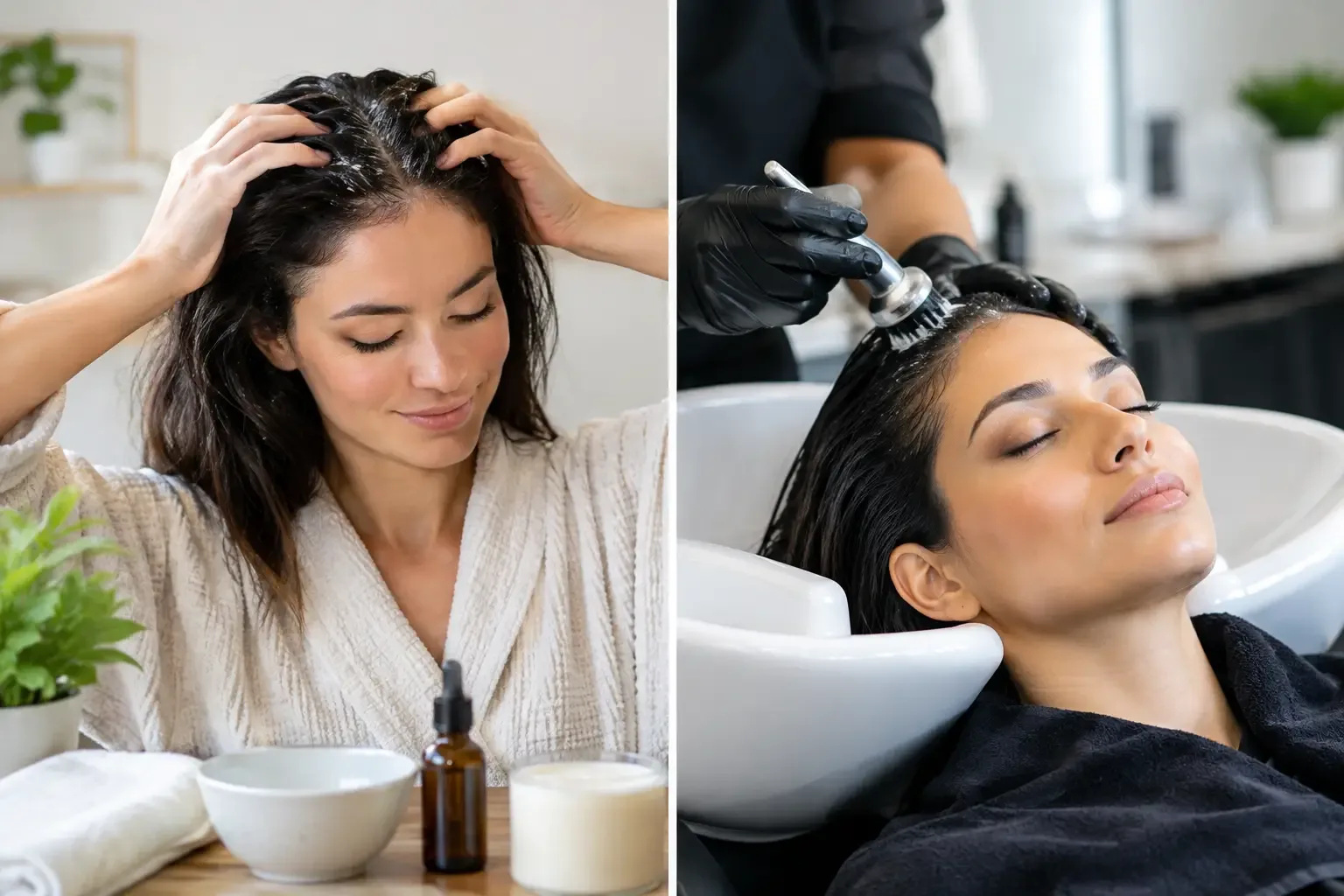
Application technique matters more than most people expect. A scalp treatment belongs on the scalp, not across the lengths of the hair. Apply it in sections so the formula reaches the skin, then use light fingertip pressure to distribute it. Aggressive rubbing is unnecessary and may irritate a sensitized scalp.
Consistency is more valuable than excess. Use the product according to its directions, typically on a clean or lightly refreshed scalp. More product does not create faster follicle signaling. It can, however, increase residue and make the scalp feel uncomfortable.
Set a realistic review point. Hair growth and density should be assessed in months, not days. Photographing the hairline, part, and crown in similar lighting every eight to twelve weeks can offer a more reliable view than checking the mirror daily. Also track practical signs: scalp comfort, visible flaking, oil balance, breakage, and how much hair is being shed during washing.
A Better Standard for Results
The most credible promise of a peptide-based routine is not instant transformation. It is more regulated scalp care. When the scalp is balanced and the follicle is supported, hair has a better biological setting in which to maintain quality, resilience, and visible fullness.
That outcome may look different for each person. It may mean less discomfort between washes. It may mean fewer broken hairs around the hairline. It may mean a more stable part line over time. For some, it means recognizing that cosmetic support has reached its limit and seeking medical guidance early rather than waiting for loss to progress.
HAAR approaches this through scalp-first analysis rather than fixed routines. The aim is to identify the conditions affecting hair quality now, then adapt care as the scalp changes.
A peptide deserves a place in the conversation when it serves the biology beneath the hair. Used with patience, accurate assessment, and a routine built for your current scalp condition, it can become a measured part of long-term hair vitality rather than another hopeful bottle on the shelf.