What Keratin Amino Acids Do for Your Hair
Keratin amino acids can condition the hair surface, but scalp health determines what grows next. Learn how to use them with precision in a modern routine.
HAAR Editorial
The HAAR editorial team — collective voice of our scalp longevity research.
A strand of hair cannot repair itself in the way living skin can. Once it emerges from the follicle, it is biologically nonliving. That is why keratin amino acids can be useful in haircare, but only when their role is understood clearly: they help improve the feel and appearance of existing lengths. They do not correct the biological conditions that determine how future hair grows.
For people managing dryness, chemical processing, heat exposure, or rough texture, that distinction matters. Better-looking hair is valuable. But lasting hair vitality begins lower - at the scalp, where follicles respond to inflammation, oil balance, circulation, stress, environmental exposure, and time.
What are keratin amino acids?
Keratin is the structural protein that makes up most of the hair fiber. It gives hair its framework, contributing to strength, flexibility, and its ability to hold shape. Keratin itself is built from amino acids - small molecular components joined in precise sequences.
In cosmetic formulations, the phrase usually refers to amino acids derived from hydrolyzed keratin. Hydrolysis breaks larger keratin proteins into smaller fragments that can interact more effectively with the hair surface. Depending on the formula, these fragments may help condition the cuticle, reduce a rough feel, support manageability, and make compromised hair look smoother.
They are not the same as dietary amino acids, and they should not be viewed as a direct route to growing new hair. Topical keratin amino acids work primarily on the visible fiber. Dietary protein and amino acids support the body more broadly, but hair growth still depends on adequate nutrition, overall health, and a well-regulated follicular environment.
Why damaged hair responds to them
The outer layer of each hair strand is the cuticle. Under normal conditions, its overlapping cells lie relatively flat, creating a smoother surface that reflects light and resists friction. Bleaching, coloring, UV exposure, hot tools, aggressive brushing, and even repeated washing can disrupt this surface.
When the cuticle becomes uneven, hair often feels dry or catches between the fingers. It may look dull, frizz more easily in humidity, and break before it can retain length. Small protein-derived ingredients can temporarily adhere to or fill irregularities along the fiber, improving how the strand behaves.
This is where keratin amino acids earn their place. They can give damaged lengths a more polished finish without relying only on heavy oils or silicones. For fine hair in particular, a lightweight amino-acid-based conditioning system may offer softness with less risk of limpness. For highly porous or bleached hair, they can complement richer conditioning ingredients that reduce friction and moisture loss.
The result is cosmetic, but not trivial. Less tangling can mean less mechanical breakage. Better slip can make daily styling less aggressive. A smoother fiber often holds a more consistent appearance between salon visits.
The limits of keratin amino acids for hair growth
A common misunderstanding is that applying keratin-related ingredients to the scalp will rebuild hair from the root. Hair biology is more exacting than that.
The follicle creates the hair fiber through active cellular processes beneath the skin. It needs an environment that is balanced enough to support the growth cycle. Excess oil, persistent flakes, product buildup, sensitivity, inflammation, oxidative stress, and changes in scalp barrier function can all affect comfort and, in some cases, the quality of the growing environment.
Keratin amino acids may be included in scalp or hair products for conditioning benefits, but they are not a stand-alone treatment for shedding, thinning, scalp irritation, or progressive loss of density. If hair shedding is sudden, patchy, prolonged, or accompanied by pain and visible scalp changes, it calls for clinical assessment rather than a stronger repair mask.
This is the central trade-off. Fiber repair products can improve the hair you have now. Scalp-focused care is designed to support the conditions for what grows next. Most people need both, but not in equal amounts and not at every stage of life.
How to use keratin amino acids with precision
Use them according to the condition of your lengths, not because the word “keratin” appears on a label. Hair that is frequently colored, heat-styled, or exposed to chlorinated water may benefit from regular use in a conditioner, rinse-out treatment, or lightweight leave-in. Hair with minimal damage may only need occasional support.
Start by observing response rather than following a fixed schedule. After several uses, hair should feel more supple, easier to detangle, and less prone to a coarse finish. If it begins to feel stiff, overly coated, or less responsive to moisture, reduce frequency and focus on conditioning and hydration. Protein-forward care is not automatically better. Highly porous hair can benefit from it, while some hair types become less flexible when protein treatments are overused.
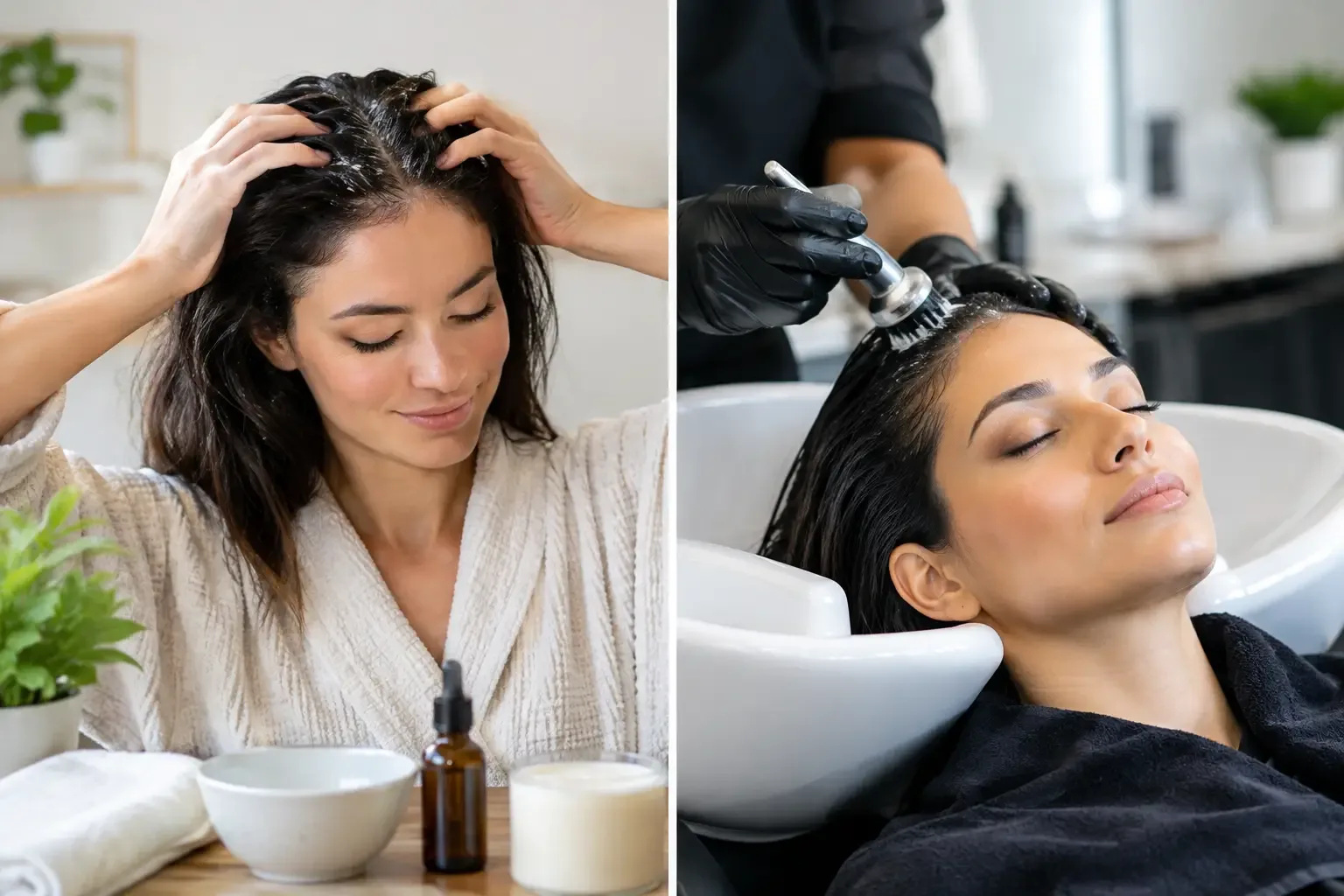
Application also matters. For a treatment intended for the hair fiber, concentrate it from mid-lengths to ends, where weathering is greatest. Avoid applying rich repair products directly to the scalp unless the product is formulated specifically for scalp use. Residue at the roots can complicate cleansing, especially for people prone to oiliness, flakes, or sensitivity.
A considered routine is usually simple: cleanse the scalp according to its needs, condition the lengths according to their damage level, and protect hair from repeated thermal and mechanical stress. The goal is not to cover every concern with more product. It is to give each area the right kind of support.
For those interested in incorporating Keratin Amino Acids into their scalp-care routine, explore Scalp Rescuing Shampoo and Bond Restore Conditioning Mask, developed with a scalp-first approach to hair longevity.
Why the scalp still sets the long-term outcome
Hair is often treated as a styling material. It is also a biological record. Changes in density, breakage patterns, oil production, sensitivity, or texture can reflect shifts that are happening before they become obvious in the mirror.
In Singapore’s humid climate, frequent cleansing, sweat, UV exposure, air-conditioned environments, and styling habits can create competing demands. The scalp may feel oily while the lengths remain dehydrated. A person may respond by washing more aggressively, then find that comfort and manageability decline further. One generic “repair” product cannot resolve this mismatch.
A scalp-first approach separates the questions. What is happening at the scalp? What is happening along the fiber? What has changed recently - stress, travel, hormones, training frequency, color services, sleep, or environmental exposure? The answers shape a more relevant protocol than a broad promise of stronger hair.
HAAR approaches hair vitality as an adaptive process. Analysis provides a starting point, but ongoing observation is equally important because scalp condition is not fixed. A routine should be able to change when the biology changes.
Choosing products beyond the protein claim
Keratin amino acids are one useful signal, not a complete standard for selecting haircare. Look at the product’s purpose first. A cleansing formula should respect scalp comfort and remove the buildup relevant to your condition. A conditioner should improve slip and reduce friction. A repair treatment should address the degree of chemical or heat damage without leaving the hair rigid or overloaded.
The rest of the formula determines much of the experience. Humectants can help support softness. Lipids and conditioning agents can reduce friction and improve cuticle feel. Film-forming ingredients may protect against humidity or heat, though they can be too heavy for certain hair types. Fragrance and essential oils may be enjoyable, but they are not neutral for every sensitive scalp.
Personalization is not about assembling the longest routine. It is about recognizing that oily roots and fragile ends can coexist, that a previously effective formula may stop fitting after a color appointment, and that visible shine is not always evidence of scalp health.
Keratin amino acids can make the lengths look and feel more refined. Use them where they belong: as part of intelligent fiber care. Then give equal attention to the living system beneath the hair, because that is where long-term quality begins.