Home Versus Salon Scalp Treatments Compared
Home versus salon scalp treatments serve different purposes. Learn when daily care is enough, when clinical assessment matters, and how to combine both.
HAAR Editorial
The HAAR editorial team — collective voice of our scalp longevity research.
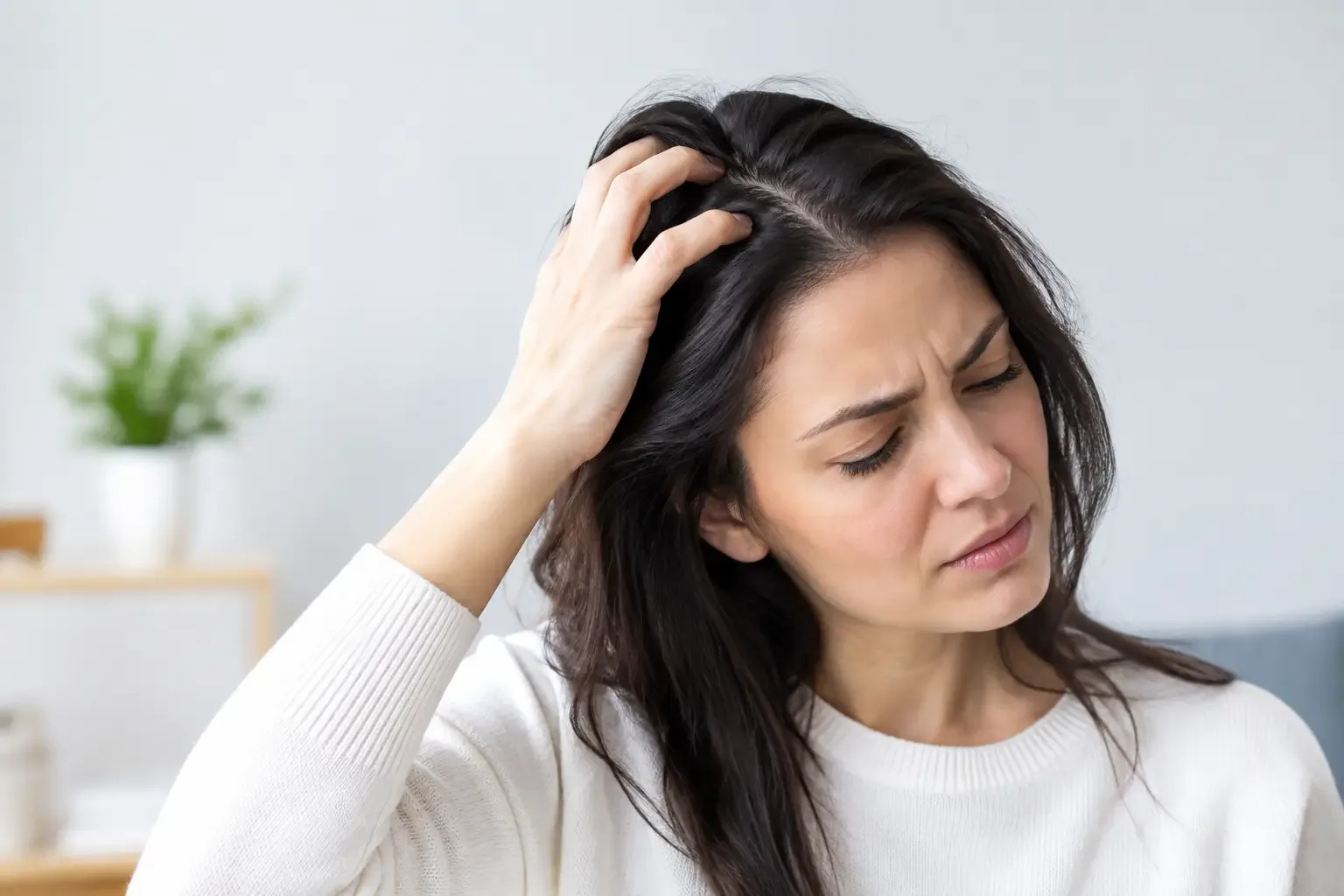
A scalp can feel fine at 8 a.m. and tight, oily, itchy, or coated by evening. That shift is not a failure of hygiene. It is a sign that the scalp is responding to heat, humidity, cleansing habits, stress, product residue, and its own changing biology. The question of home versus salon scalp treatments is therefore not about which option is more luxurious. It is about choosing the right level of care for the condition in front of you.
Hair quality is a visible outcome. Scalp condition is the system beneath it. When the system is well regulated, follicles have a more stable environment for healthy-looking growth, comfort, and density over time.
Home Versus Salon Scalp Treatments: Different Jobs
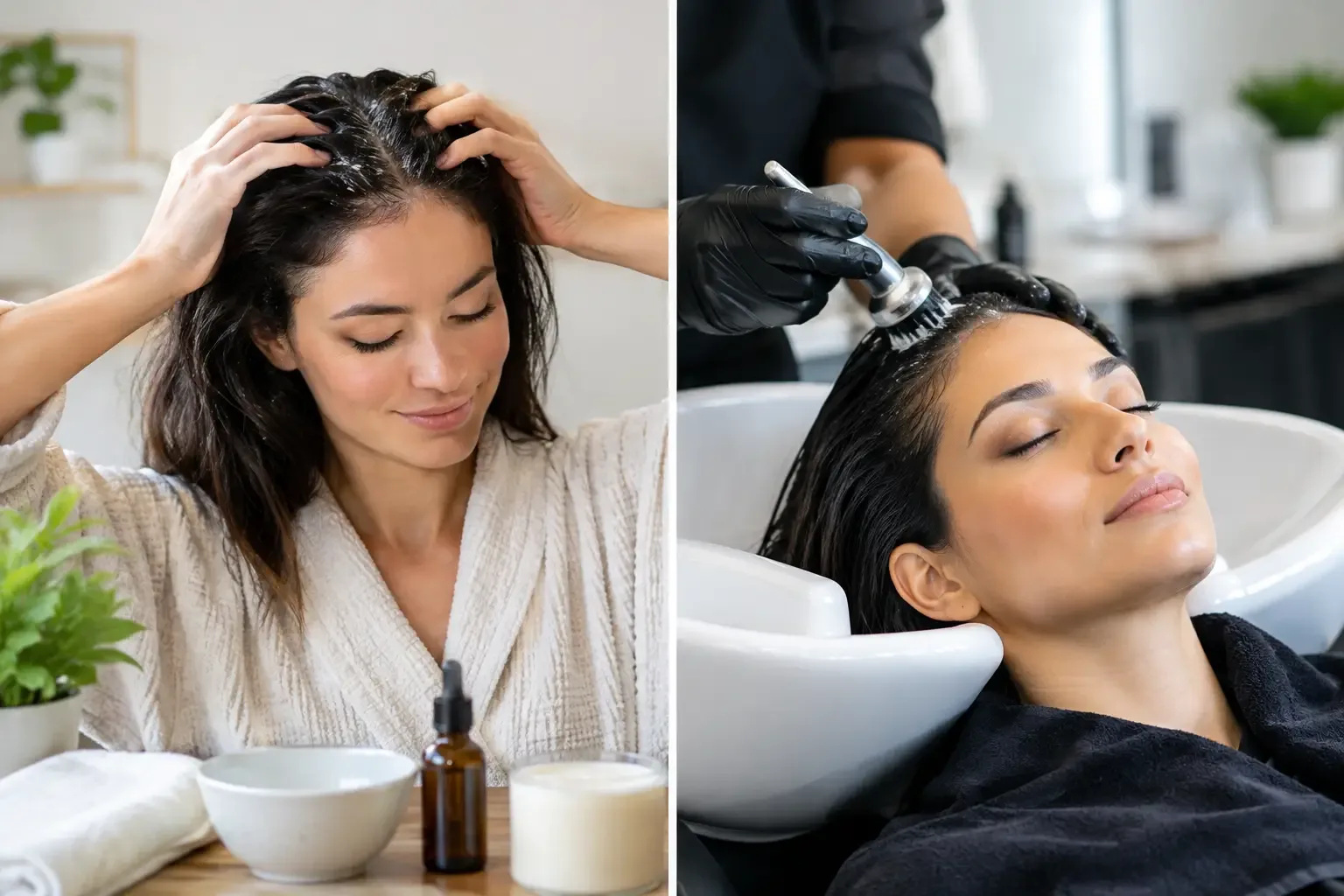
At-home care is designed for continuity. It supports the scalp between washes and across changing weeks, when oil production, sensitivity, flaking, or dryness may move in response to lifestyle and environment. A well-selected home routine can help maintain barrier comfort, remove daily buildup, and support a balanced scalp environment without requiring a major interruption to your schedule.
Salon treatment is designed for intervention and observation. It can offer a more intensive reset, professional cleansing, massage, exfoliation, or targeted applications. More importantly, a skilled practitioner may identify patterns that are difficult to see on your own: compacted buildup around follicles, uneven oil distribution, visible irritation, or areas of reduced density.
Neither replaces the other by default. A salon session performed every few months cannot compensate for a mismatched daily routine. Equally, a home routine may reach its limit when discomfort persists, shedding changes noticeably, or the scalp no longer responds as expected.
The useful distinction is simple. Home care maintains. Professional care assesses, resets, and escalates when needed.
What At-Home Treatment Can Do Well
The advantage of home treatment is frequency. The scalp does not operate on appointment intervals. It responds daily to sweat, urban pollution, styling products, sleep quality, hormonal variation, and environmental exposure. In Singapore, for example, humidity and frequent perspiration can make oil, residue, and scalp discomfort feel more persistent, even for people who do not consider their hair oily.
A precise at-home protocol can address this ongoing exposure. Depending on current scalp needs, it may include a suitable cleanser, a targeted leave-on formula, a periodic exfoliating step, or a treatment that supports hydration and barrier function. The value is not in using more products. It is in using the right product at the right cadence.
Home treatment is especially effective when concerns are mild, familiar, and responsive. Perhaps your scalp feels tight after frequent washing, or it becomes oily at the roots after intense workouts. Perhaps you have occasional flakes during high-stress periods. If symptoms settle when your routine is adjusted, consistent home care may be sufficient.
It also gives you the best view of cause and effect. Changing five products at once makes it nearly impossible to know what helped or what caused irritation. A measured approach - one adjustment, enough time to observe, then another if needed - produces clearer information.
Where Home Care Has Limits
At-home treatment can become counterproductive when it is driven by guesswork. Scrubbing harder is not always the answer to flakes. Washing less is not always the answer to oil. Applying rich oils to an already congested scalp may worsen the feeling of buildup, while aggressive exfoliation can further disrupt a sensitive barrier.
The limitation is visibility. You can feel tightness, tenderness, itch, or excess oil, but you may not be able to distinguish between surface residue, irritation, dryness, or an underlying scalp condition. The same symptom can have different causes. That is why a routine built solely around viral advice or a product trend often produces inconsistent results.
What a Salon Scalp Treatment Adds
A professional treatment offers more than a longer massage and a cleaner finish. At its best, it provides a closer reading of the scalp’s current state. This can be valuable when your hair behavior has changed without an obvious explanation: increased shedding, persistent flakes, roots that become oily unusually fast, new sensitivity, or hair that seems flatter and less responsive despite regular washing.
The treatment itself may include deeper cleansing, controlled exfoliation, hydration, massage, or ingredients selected for a specific concern. These steps can make the scalp feel immediately lighter and more comfortable. That immediate result has value, particularly when buildup or surface dryness is contributing to discomfort.
But immediate comfort is not the same as long-term correction. A salon service is only as useful as the assessment behind it and the home plan that follows. If every concern receives the same detox, oil treatment, or intense scrub, the service may feel satisfying without being truly personalized.
A good consultation should clarify what is being treated, why that approach fits your scalp, and what to do over the following days and weeks. It should not rely on fear-based claims about blocked follicles or promise to stop hair loss in one session.
When a Salon Visit Is Worth It
Consider professional assessment when a concern has persisted through several weeks of appropriate home care, when your scalp has changed suddenly, or when you cannot identify what is driving the problem. It is also useful before investing in a complex routine, especially if you are prone to sensitivity or have tried many products without a clear result.
A salon treatment can be a practical checkpoint during periods of change: after travel, high stress, hormonal transitions, a new training routine, repeated coloring, or increased use of styling products. These events can alter the scalp’s needs. The routine that worked six months ago may no longer be the right one.
For recurring dandruff, painful inflammation, crusting, patches of hair loss, or significant shedding, a salon is not a substitute for medical care. These signs warrant evaluation by a dermatologist or qualified medical professional. Cosmetic and wellness treatments have a role, but they should not delay diagnosis.
The Cost of Treating Every Scalp the Same
Conventional haircare often separates people into simple categories: dry, oily, dandruff-prone, or thinning. Real scalp behavior is more dynamic. A scalp can be oily at the roots yet uncomfortable after washing. It can show visible flakes because of dryness, sensitivity, or excess oil. It can experience temporary shedding after a stressful period without fitting neatly into a single label.
This is where personalization matters. The question is not, “What is the best scalp treatment?” It is, “What is my scalp signaling now, and what should change in response?”
At HAAR, this principle informs an adaptive approach to scalp longevity. Analysis provides a starting point, but the protocol should remain responsive. Your scalp is not fixed. It is shaped by exposure, behavior, and biology over time.
Build a Combined Care Rhythm
For many people, the strongest strategy is not home or salon. It is a deliberate combination. Home care carries the daily work. Professional assessment provides periodic perspective and a more intensive intervention when the scalp needs it.
Start with a routine you can sustain. Cleanse at a frequency that leaves your scalp comfortable rather than stripped or congested. Use targeted treatment based on an identified need, not a generic desire for “growth.” Pay attention to how your scalp feels 24 to 48 hours after washing, not only how your hair looks immediately afterward.
Then use professional care selectively. Book it when there is a clear reason: a persistent change, a seasonal reset, uncertainty about your condition, or a need for more informed product selection. If the treatment cannot explain its role in your broader routine, it may be an experience rather than a strategy.
The Better Question to Ask
Rather than asking whether home treatment is better than salon treatment, ask what your scalp needs this month. Stable scalps often benefit most from disciplined maintenance. Reactive or changing scalps may benefit from closer assessment and a revised protocol. Both require attention, not excess.
The aim is not to chase a permanently perfect scalp. It is to recognize change early, respond with precision, and give the follicular environment the consistency it needs to perform well. What you do between appointments is often where scalp longevity is built.