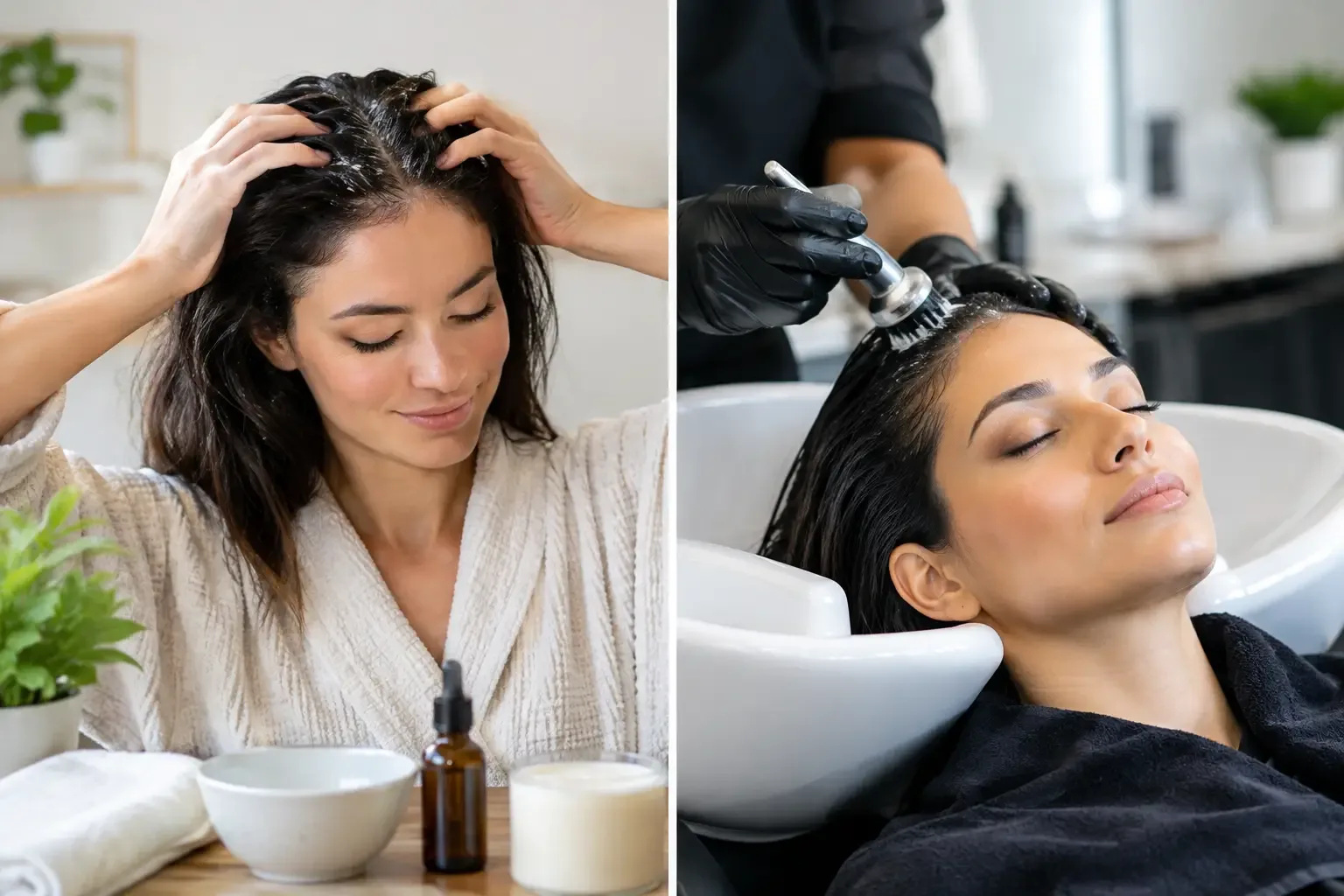
Why Scalp Itching Persists and What It Signals
Learn why scalp itching persists, from barrier disruption to inflammation, and how adaptive, scalp-first care can restore lasting comfort and daily balance.
HAAR Editorial
The HAAR editorial team — collective voice of our scalp longevity research.
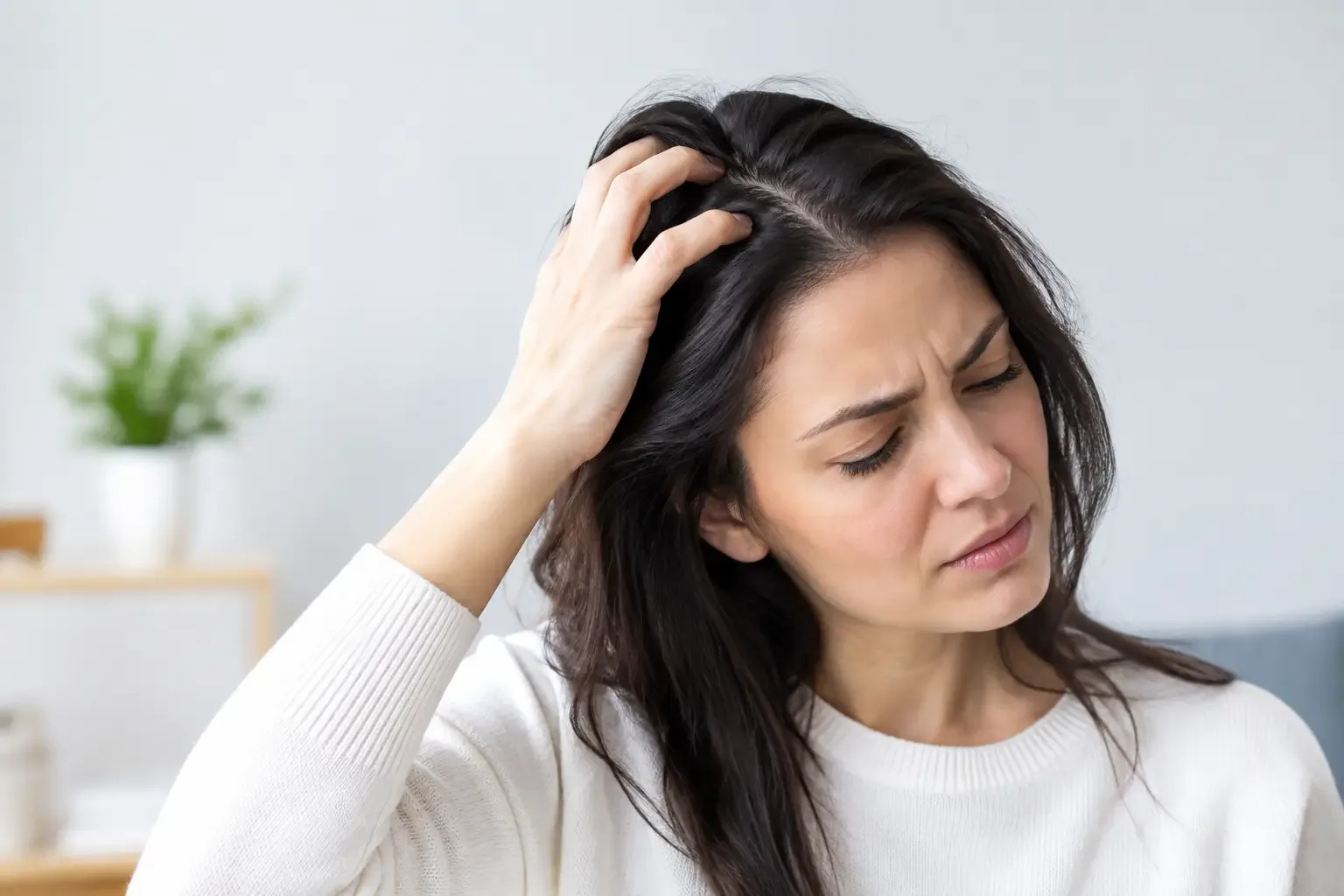
An itch that returns days after washing is rarely just an inconvenience. It is often a sign that the scalp has not returned to equilibrium. Understanding why scalp itching persists means looking beyond the urge to scratch and toward the conditions that keep the scalp reactive: disrupted barrier function, buildup, inflammation, microbial imbalance, or a routine that no longer fits.
Hair may be what you see. The scalp is where the signal begins.
Why scalp itching persists after you treat it
Most quick fixes focus on the sensation. A stronger cleanser, a cooling tonic, or a rich oil may offer temporary relief. But relief is not the same as regulation. If the underlying trigger remains, the itch can return as soon as the effect wears off.
The scalp is living skin with a dense concentration of follicles, oil glands, nerves, and microorganisms. It is also exposed to sweat, UV, heat, styling residue, friction, and frequent cleansing. When these systems fall out of balance, the scalp can become more sensitive to stimuli that once felt harmless.
Persistent itching is therefore not one condition. It is a response. The right next step depends on what is driving it now, not what worked for your scalp six months ago.
The barrier may be compromised
Your skin barrier keeps moisture in and irritants out. On the scalp, that barrier can be weakened by over-cleansing, aggressive exfoliation, hot water, bleaching, chemical services, or formulas with ingredients that do not agree with your skin.
When the barrier is compromised, water escapes more easily and the scalp becomes less selective about what it lets in. Sweat, fragrance, styling products, and even normally mild cleansing agents can start to sting or itch. Flaking may appear, but not always. Some scalps simply feel tight, tender, or persistently uncomfortable.
This creates a common cycle: an itchy scalp is washed more often or treated more intensely, which further strips the barrier and prolongs the discomfort. In this case, more intervention is not necessarily better. The goal is controlled cleansing and recovery, not a harsher reset.
Dryness is not always the same as dehydration
A scalp can feel dry because it lacks protective lipids, because it is dehydrated, or because inflammation is making the surface feel tight. These states can overlap, yet they do not respond identically.
Heavy oils may make a lipid-deficient scalp feel more comfortable. On a scalp prone to buildup or seborrheic dermatitis, however, they may trap residue and make flakes harder to lift. Precision matters. Comfort should be built around the scalp's current condition, not a universal idea of moisture.
Buildup can keep the scalp in a reactive state
Buildup is not limited to visible flakes. It can include sebum, sweat salts, dead skin cells, dry shampoo, styling polymers, and mineral deposits from water. Together, these can sit close to the follicle opening and create an environment that feels congested, itchy, or sensitive.
Urban routines can intensify the issue. Exercise, air conditioning, humidity, commuting, and frequent product layering all change what remains on the scalp between washes. In humid climates such as Singapore, sweat and oil may accumulate quickly, even when hair lengths feel dry from indoor cooling or heat styling.
The answer is not to exfoliate daily. Excessive exfoliation can inflame an already stressed scalp. Instead, consider whether your cleansing cadence and formula are removing what your scalp accumulates without disrupting what it needs to protect itself.
Inflammation changes the itch threshold
Itching is partly a nerve signal. When the scalp is inflamed, its threshold for irritation lowers. A light touch, a warm shower, a tight ponytail, or a product that was previously tolerated can suddenly provoke discomfort.
Stress can contribute. So can poor sleep, hormonal changes, illness, seasonal shifts, and ongoing exposure to heat or pollution. These factors do not cause every scalp concern, but they can amplify inflammatory signaling and alter oil production, barrier resilience, and the skin's recovery rate.
This is why a scalp can seem unpredictable. The products may be the same, while the biological context has changed. A fixed routine cannot always meet a changing scalp.
Dandruff and seborrheic dermatitis need a different lens
Recurring flakes with itch, especially when they are oily, yellowish, or concentrated around the hairline, crown, eyebrows, or sides of the nose, may point to dandruff or seborrheic dermatitis. These conditions involve an inflammatory response associated with Malassezia yeast, which naturally lives on the skin.
Oil alone is not the problem, and a dry-looking scalp is not automatically dandruff. The pattern matters. A targeted anti-dandruff approach may be useful, but results depend on using the appropriate active treatment consistently and then adjusting maintenance as symptoms settle. Overcorrecting with harsh cleansing can still compromise comfort.
Contact reactions can be subtle
Not every product reaction looks like a dramatic rash. Contact irritation or allergy may present as itch, burning, tightness, redness, flakes, or tenderness that develops gradually. Hair dye, fragrance, essential oils, preservatives, botanical extracts, and leave-on styling products are all possible triggers.
The timing is informative. Did the itching begin after a new color service, dry shampoo, scalp serum, or fragrance-heavy product? Does it worsen shortly after wash day? Does it improve when a product is paused? These observations are more useful than adding several new treatments at once.
When the scalp is reactive, simplify first. Introduce one change at a time and give the skin enough time to show its response. A crowded routine makes the source of irritation harder to identify.
The hair routine may be treating the wrong problem
Many people select haircare based on strand concerns: shine, smoothness, volume, or repair. Those needs are valid, but they do not explain what the scalp requires. A nourishing mask applied close to the roots, a dense leave-in formula, or a scalp oil chosen for “dryness” can be mismatched to a scalp that is actually inflamed or buildup-prone.
Scalp care works best when it distinguishes the condition of the roots from the condition of the lengths. It is entirely possible to have an oily, itchy scalp and dry, chemically processed ends. One product category rarely solves both.
A scalp-first approach starts with assessment. Look at itch timing, visible scale, oiliness, sensitivity, wash frequency, lifestyle exposure, and recent changes. HAAR's Adaptive Scalp Longevity System is built around this principle: care should respond to the scalp's biological signals rather than force every scalp into the same routine.
For those interested in incorporating anti-itch product into their scalp-care routine, explore InstaCalm Pro Relief Booster, developed with a scalp-first approach to hair longevity.
When persistent scalp itching needs medical attention
Some itching needs more than an adjusted routine. Seek evaluation from a dermatologist or qualified healthcare professional if symptoms are severe, persistent, painful, or spreading, or if you notice bleeding, crusting, pustules, pronounced redness, patchy hair loss, or thick scale.
Conditions such as psoriasis, eczema, fungal infections, folliculitis, and scarring hair disorders can overlap in appearance but require different treatment. Self-treating for too long can delay appropriate care. A professional assessment is especially valuable when over-the-counter approaches have not improved the condition after several weeks.
Build for regulation, not momentary relief
The most effective scalp routine is often quieter than expected. Cleanse at a frequency appropriate for your oil and activity levels. Use targeted treatment only where there is a clear reason. Avoid stacking multiple strong actives. Protect the scalp from unnecessary heat, friction, and product overload.
Then reassess. If the itch changes with weather, stress, exercise, hormonal shifts, or a new service, your protocol may need to change too. That is not inconsistency. It is responsiveness.
A calm scalp is not achieved by ignoring the itch or overpowering it. It comes from recognizing the signal early, respecting the biology beneath it, and giving the scalp care that can adapt as your life does.