Pollution Effects on Scalp Health Explained
Pollution effects on scalp health can disrupt comfort, balance, and growth conditions. Learn how precise daily care helps defend and restore the scalp.
HAAR Editorial
The HAAR editorial team — collective voice of our scalp longevity research.
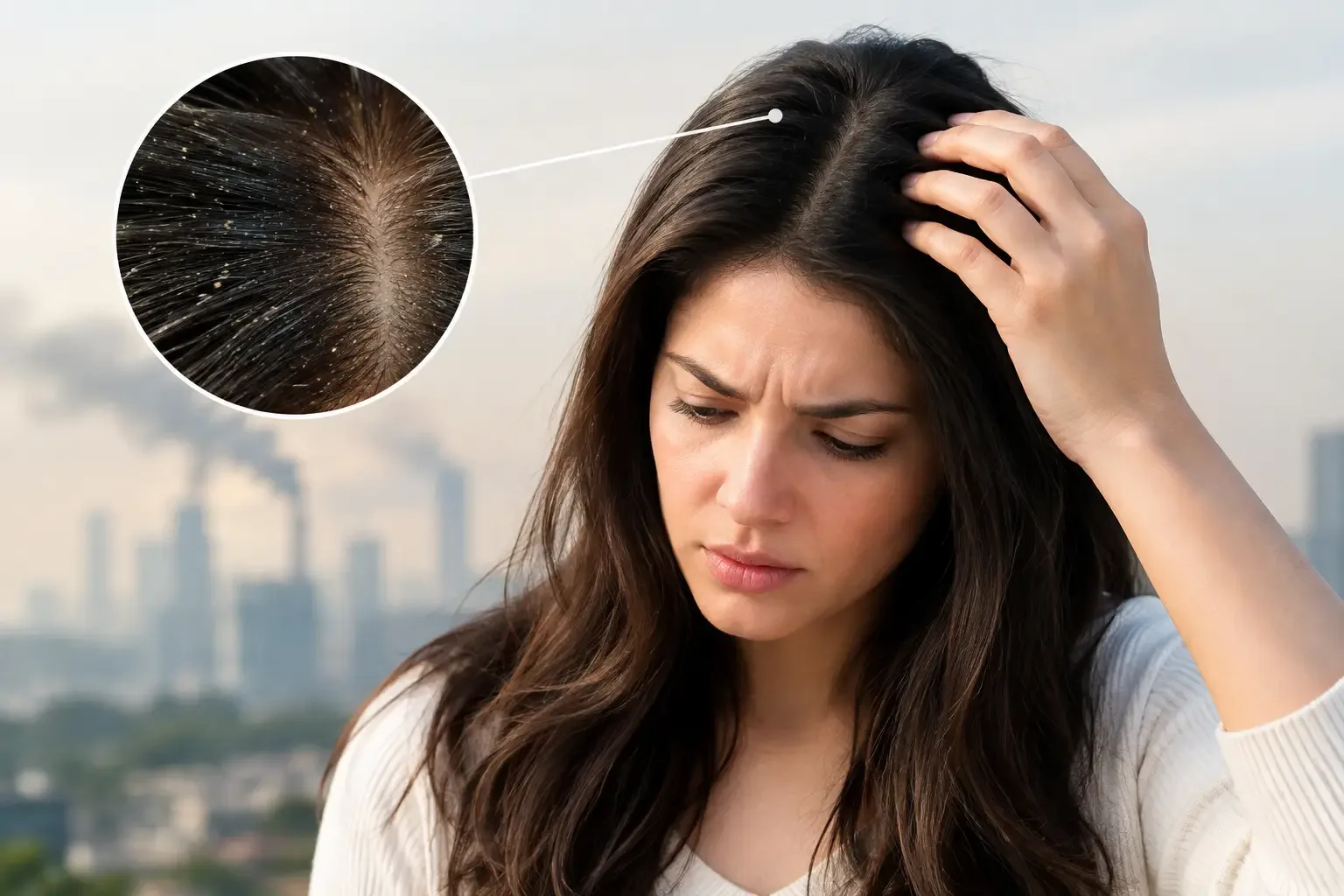
A scalp can feel different long before hair looks different. More oil at the roots by midday. A persistent tightness after a commute. Flakes that return despite a familiar routine. These shifts are often dismissed as a product problem. Yet pollution effects on scalp health can be part of the underlying pattern.
For people living and working in dense urban environments, the scalp is exposed every day. Fine particles settle at the roots. Exhaust-related compounds interact with surface oil. Heat, humidity, sweat, UV exposure, and air-conditioning can compound the response. The result is not one universal concern. It is a changing biological environment that requires attention before discomfort becomes visible damage.
How Pollution Affects Scalp Health
Pollution is not simply dirt that can be shampooed away. Airborne particulate matter, smoke, ozone, and volatile compounds can collect on the scalp and hair fiber. When they combine with sebum, sweat, styling residue, and dead skin cells, they can create a more congested surface environment.
The scalp’s barrier is designed to regulate moisture, lipids, and microbial balance. Repeated environmental exposure may place that regulation under pressure. Some people notice excess oil and an itchy feeling. Others experience dryness, sensitivity, or a rougher scalp surface. Hair may lose its lightness at the root, not because it is inherently unhealthy, but because the scalp environment is less balanced.
This matters because hair grows from follicles embedded in scalp skin. Healthy-looking hair is supported by conditions beneath the surface: adequate barrier function, controlled inflammation, efficient renewal, and a stable follicular environment. Pollution does not affect every scalp in the same way, but persistent exposure can make pre-existing tendencies more apparent.
Oxidative stress is the hidden pressure
Many pollution-related scalp concerns are linked to oxidative stress. This occurs when reactive molecules outpace the skin’s antioxidant defenses. At a low level, the body manages this naturally. With repeated exposure, however, oxidative stress can contribute to irritation, lipid imbalance, and a less resilient skin barrier.
On the scalp, this may show up as reactivity rather than a dramatic event. You may tolerate your usual shampoo less well. Your scalp may feel uncomfortable after time outdoors. Your roots may become oily while the lengths feel dry. These are not always separate problems. They can be signals that regulation is becoming less efficient.
Buildup changes more than appearance
Particulate matter is exceptionally small. It can adhere to sebum and settle around follicles, especially when cleansing is rushed or infrequent. This does not mean intensive cleansing is always the answer. Over-cleansing can strip supportive lipids and trigger further dryness or rebound oiliness.
The goal is precise removal without disruption. A scalp that is oily, flaky, and sensitive needs a different approach from one that is dry, tight, and exposed to frequent indoor air-conditioning. The right routine depends on the scalp’s current condition, not a fixed hair type label.
Why Urban Routines Can Magnify the Problem
In Singapore, exposure rarely occurs in isolation. High humidity can increase sweat and oil activity, while air-conditioned offices may leave the scalp feeling dry or tight. Outdoor commutes add heat, UV exposure, and airborne particles. Fitness sessions, helmet use, and late-night styling can layer onto the same scalp without enough time for recovery.
This is why a generic instruction to “wash more often” is incomplete. Cleansing frequency should reflect oil production, exercise, styling habits, sensitivity, and environmental exposure. For one person, a daily gentle cleanse may support comfort. For another, daily washing with an overly aggressive formula may weaken barrier function and intensify irritation.
Stress and sleep also influence the equation. They can affect inflammatory signaling, sebum activity, and the perception of itch or discomfort. Pollution may be the visible external pressure, but scalp health is adaptive. Its response reflects the cumulative load.
Signs Your Scalp May Need More Environmental Support
A scalp does not need to be visibly inflamed to need adjustment. Early changes are often subtle: roots that feel coated soon after washing, intermittent itch, small flakes, odor at the scalp, tenderness, or hair that seems flatter and harder to style.
Increased shedding can also feel alarming, but it deserves perspective. Hair shedding has many possible influences, including stress, illness, hormonal shifts, nutritional status, and genetic predisposition. Pollution alone is rarely a complete explanation. Still, if scalp discomfort and shedding occur together or persist, the scalp environment should be assessed rather than masked with heavier styling products.
Look for patterns. Does discomfort increase after outdoor days? Does oiliness spike when you wear a cap or helmet? Do flakes worsen after a certain cleansing routine? Observing these changes creates a more useful starting point than guessing based on what worked last year.
A Scalp-First Defense Strategy
Environmental defense should not be a single product claim. It is a routine designed to cleanse, regulate, and support renewal without forcing the scalp into extremes.
Cleanse with intention
Remove daily buildup consistently, particularly after commuting, exercise, or high-exposure days. Choose a cleanser that leaves the scalp refreshed rather than squeaky or tight. That post-wash feeling matters. Persistent tightness can indicate that the routine is too stripping for your current condition.
If you use dry shampoo, texture sprays, or heavy styling products, make room for a more thorough reset when needed. These products are not inherently harmful, but they add to the residue that can hold onto oil and environmental particles at the scalp.
Support the barrier, not just the hair shaft
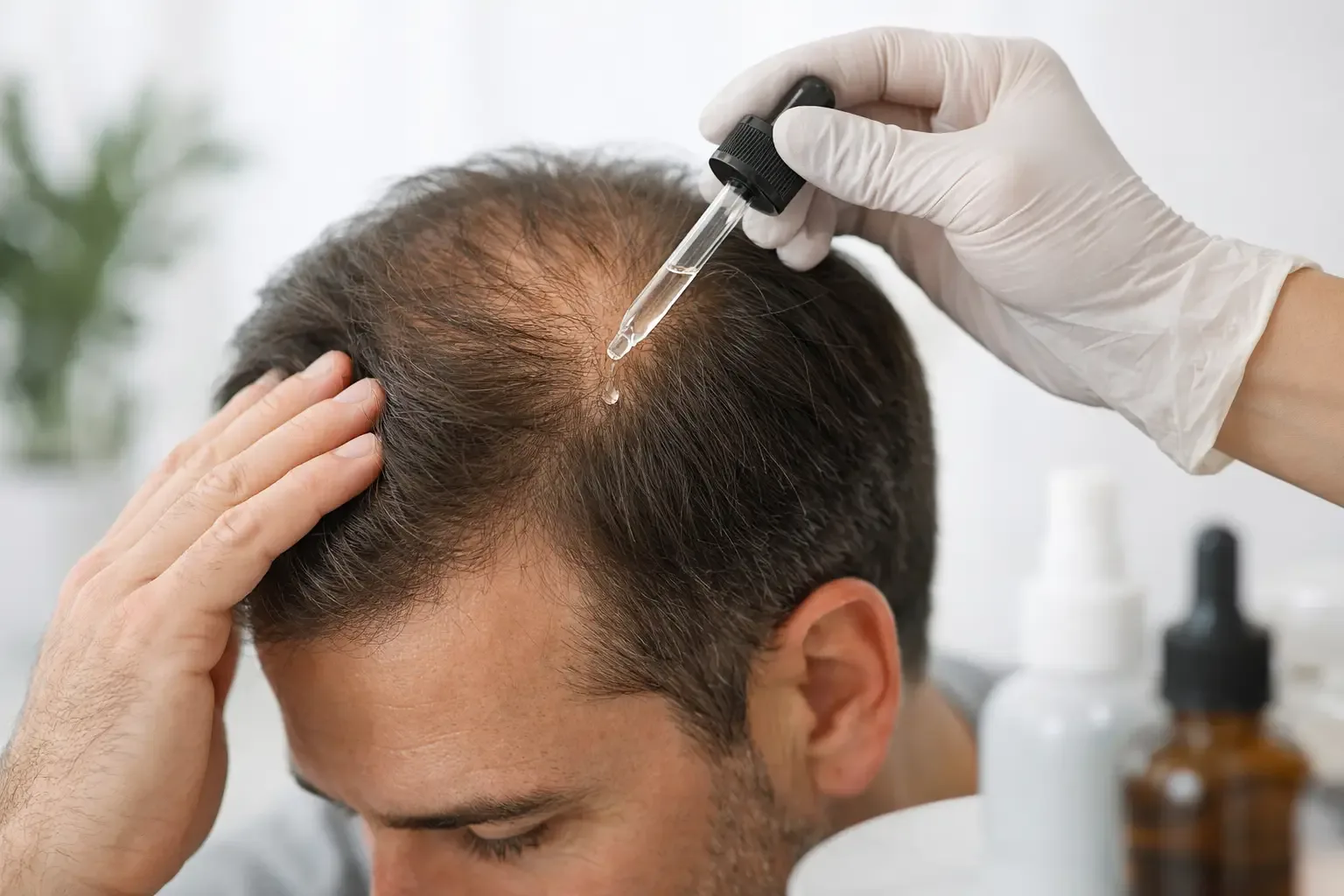
Conditioning treatments for the lengths can improve softness and appearance, but they do not automatically address the scalp. A scalp-focused treatment can be useful when there is dryness, uneven oil production, sensitivity, or recurrent buildup.
The most effective format depends on the concern. Lightweight leave-on support may suit a dry, reactive scalp. A targeted exfoliating treatment may be more appropriate for persistent congestion. Neither should be used automatically or indefinitely. The scalp changes with weather, stress, travel, and lifestyle. Care should change with it.
Reduce exposure where it is practical
You cannot eliminate urban pollution, nor do you need to build a life around avoiding it. Small protective habits can reduce unnecessary load. Rinse or cleanse after intense sweating. Avoid leaving heavy product buildup on the scalp overnight. Keep hats, helmets, brushes, and pillowcases clean. Use shade and UV protection for the scalp when the hair is sparse or the part is exposed.
These measures are supportive, not corrective on their own. They work best alongside a routine that respects your scalp’s baseline needs.
Personalization Is the Difference
The conventional approach treats oil, flakes, and shedding as separate cosmetic categories. In practice, they can be connected through the scalp’s regulatory state. A dry scalp can still have oily roots. A congested scalp can also be sensitive. A person with no visible flakes may still have early barrier disruption.
That is why fixed routines often stop working. They were built for a static version of a scalp that does not exist. Environmental conditions shift. So do hormones, stress levels, washing habits, and skin tolerance.
A diagnostic-led approach begins with what the scalp is signaling now. It considers visible concerns, but also the less obvious changes that can precede them. HAAR’s Adaptive Scalp Longevity System™ is built around this principle: analyze the current condition, apply a targeted protocol, and adjust as the scalp responds.
When to Seek Professional Assessment
Persistent itching, pain, burning, thick scale, sudden patchy hair loss, or marked shedding warrant professional evaluation. These symptoms may reflect conditions that need medical assessment rather than cosmetic trial and error.
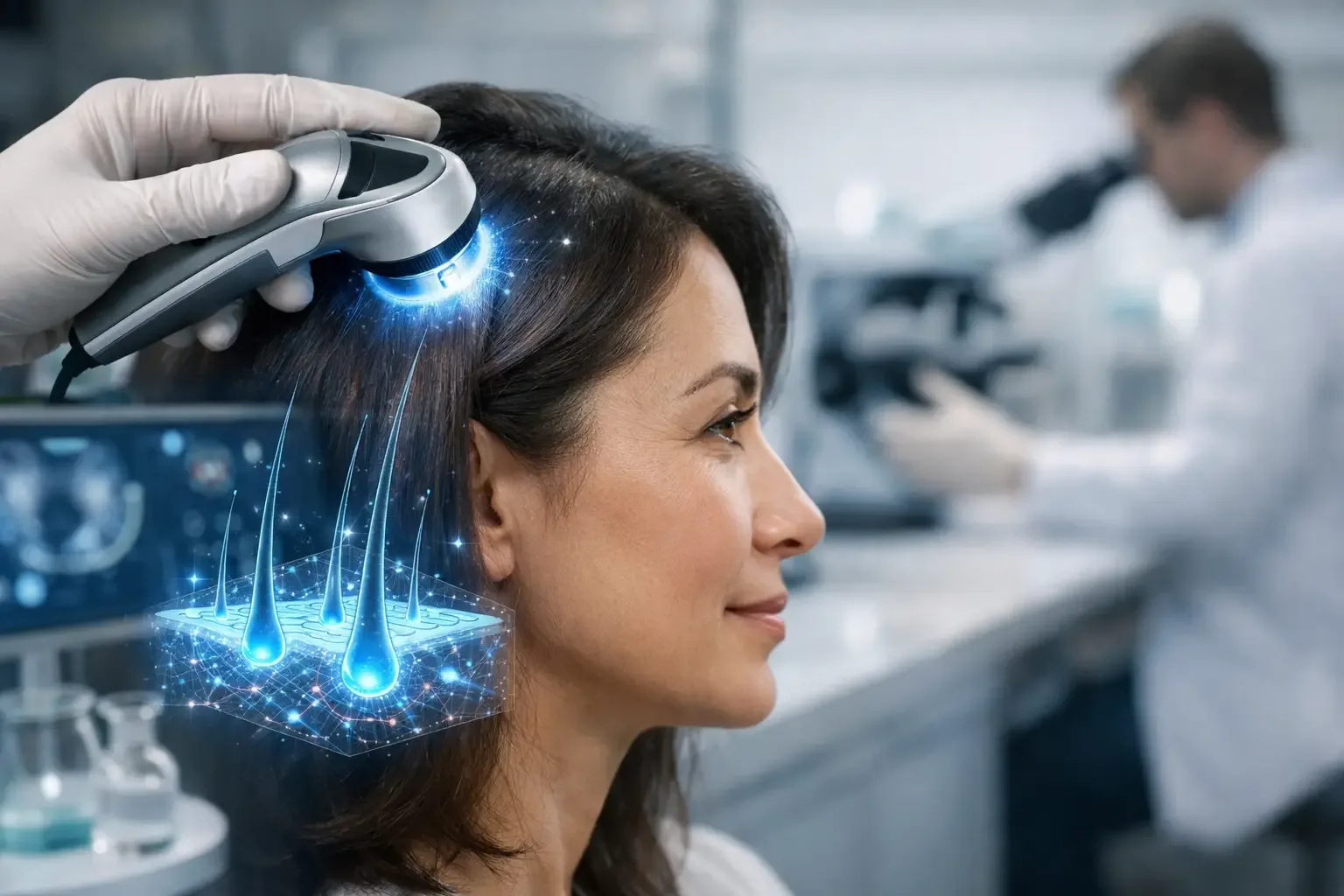
For less urgent but recurring concerns, scalp analysis can bring clarity. It helps distinguish surface buildup from sensitivity, excessive oil activity, dryness, or a combination of factors. Precision prevents the common cycle of treating every concern with stronger cleansing and creating a new imbalance.
Your scalp meets the environment before your hair does. Give it care that recognizes the exposure, reads the response, and evolves before minor shifts become the routine.