Scalp Care for Hair Thinning: What Changes First
Scalp care for hair thinning starts below the surface. Learn how inflammation, buildup, stress, and renewal shape a precise long-term routine each day.
HAAR Editorial
The HAAR editorial team — collective voice of our scalp longevity research.
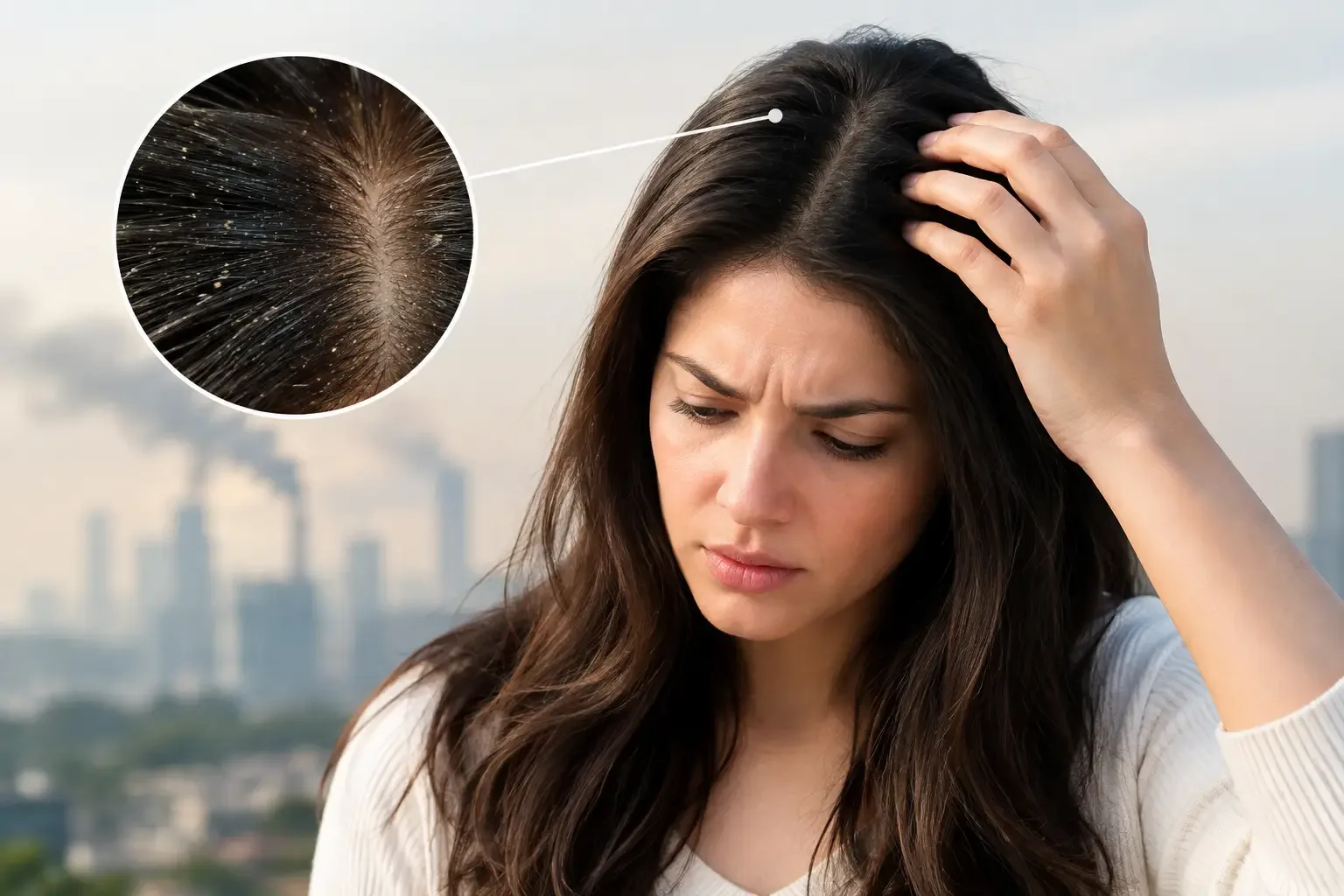
A widening part rarely begins with the part itself. Long before density appears to change, the scalp may be dealing with excess oil, persistent micro-irritation, buildup, disrupted renewal, or a shift in its growth cycle. Scalp care for hair thinning begins by taking these early biological signals seriously.
Hair is visible. The conditions that support it are not. This distinction matters because thinning is rarely improved by treating the hair shaft alone. A softer shampoo or a volumizing styling product may improve appearance in the moment, but neither necessarily addresses the scalp environment in which each follicle functions.
For people who value prevention, the question is not simply, “What product should I use?” It is, “What has changed at the scalp, and what does it need now?”
Hair Thinning Is Not One Condition
Hair thinning can describe several different experiences: greater shedding in the shower, a less dense ponytail, a broader part, reduced volume around the crown, or hair that seems finer than before. These patterns can overlap, but they do not always have the same cause.
Genetics can influence follicle sensitivity and the gradual miniaturization of hairs over time. Stress, illness, rapid weight change, poor sleep, nutritional gaps, hormonal shifts, certain medications, and inflammatory scalp conditions can also affect shedding or visible density. In humid, high-exposure environments such as Singapore, sweat, oil, pollution, and frequent cleansing can further complicate scalp balance.
This is why a fixed routine has limits. A scalp that is oily and congested needs a different approach from one that is dry, reactive, or prone to flaking. Treating every thinning concern with heavy oils, aggressive exfoliation, or a generic anti-hair-loss shampoo can create more imbalance rather than less.
Why the Scalp Comes Before the Strand
Each hair follicle is a living structure embedded in scalp skin. It depends on a stable local environment: effective cleansing, balanced sebum, intact barrier function, healthy renewal, and minimal ongoing inflammation. When that environment is compromised, the follicle may not perform at its best.
A congested scalp does not automatically cause hair loss. Nor does a dry scalp explain every case of shedding. The relationship is more nuanced. Persistent flakes, itching, tenderness, oiliness, or product residue may indicate that the scalp needs regulation. Left unaddressed, these conditions can make daily care less effective and may compound an existing tendency toward thinning.
The goal is not to make the scalp feel aggressively clean. It is to maintain a condition where follicles are not constantly managing irritation, excess residue, or barrier disruption. Scalp longevity is built through consistency, not intensity.
Scalp Care for Hair Thinning Starts With Observation
Before adding treatments, establish what is actually happening. Notice whether shedding is sudden or gradual, whether there is itch or sensitivity, and whether the concern is diffuse or concentrated at the temples, part, or crown. Also consider timing. A noticeable increase in shedding two to four months after a major stressor, illness, or dietary change may warrant a different conversation than slowly progressive thinning over several years.
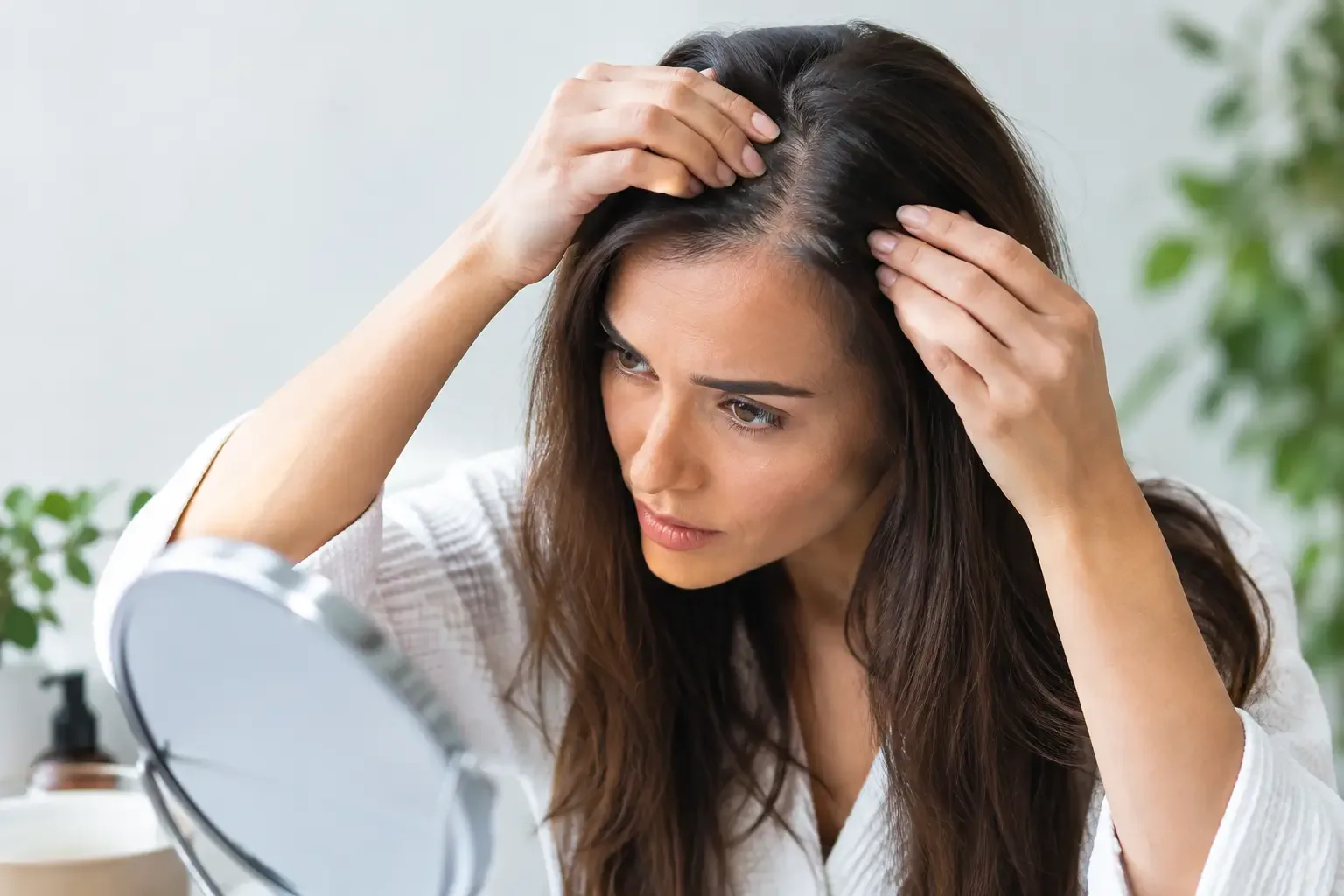
Photos taken in the same light and parting every few weeks can be more useful than daily mirror checks. Hair density changes slowly, while anxiety can make normal shedding feel more dramatic. Tracking patterns creates a clearer baseline.
A professional scalp analysis can add another layer of precision. It can identify visible concerns such as buildup, redness, excess oil, flaking, or uneven follicular density that are difficult to assess at home. HAAR approaches this as a changing biological signature rather than a permanent label. The right protocol should respond as the scalp does.
Build a Routine Around Regulation
An effective routine does not need ten steps. It needs the right steps, used at the right frequency.
Cleanse Without Stripping
Cleansing removes sebum, sweat, environmental particles, and styling residue that can accumulate around the scalp. Frequency depends on oil production, activity level, product use, and comfort. Someone who exercises daily and develops visible oiliness may need to cleanse more often than someone with a dry, low-oil scalp.
The trade-off is simple: under-cleansing can leave residue behind, while over-cleansing with harsh formulas can disrupt the barrier and create tightness or rebound oiliness. Focus the cleanser on the scalp, use fingertips rather than nails, and rinse thoroughly. Hair lengths need gentler handling than the scalp itself.
Treat Buildup With Restraint
Exfoliating scalp treatments can be useful when residue, flakes, or excess oil are present. But more exfoliation is not better. Overuse can increase sensitivity, especially if the scalp is already itchy, inflamed, or compromised by coloring and heat styling.
Use a targeted treatment according to your scalp’s condition, not because a calendar says it is time. If the scalp feels calm, clear, and balanced, repeated aggressive exfoliation may offer little benefit. Regulation means knowing when to stop pushing.
Support the Scalp Barrier
The scalp has a barrier, much like facial skin. When it is disrupted, water loss, sensitivity, and reactivity can rise. Tightness after shampooing, stinging from familiar products, persistent dryness, or discomfort beneath the hair can signal that the routine is too stripping or overly active.
Look for lightweight scalp-support products designed to hydrate and calm without leaving heavy residue. Application matters. Part the hair in sections and place the formula on the scalp, not only over the hair. A product that remains on the strands cannot fully support the skin beneath them.
Treat Daily Habits as Scalp Inputs
Scalp condition is influenced by more than a bottle in the shower. Tight hairstyles create repeated traction. High-heat tools can affect hair fiber quality and make reduced density appear more pronounced. Incomplete rinsing leaves residue. Poor sleep and prolonged stress can influence hair cycling in people who are susceptible.
No routine can erase every internal driver of hair thinning. It can, however, reduce avoidable scalp stress and make the environment more supportive of ongoing growth. Small adjustments are often more sustainable than a dramatic reset.
When Shedding Needs Medical Attention
Scalp care is a meaningful part of a long-term strategy, but it is not a substitute for medical assessment when warning signs are present. Seek evaluation from a qualified clinician or dermatologist if shedding is sudden and significant, if you see distinct bald patches, if the scalp is painful or markedly inflamed, or if thinning is progressing quickly.
It is also sensible to investigate if hair changes accompany fatigue, menstrual changes, unexplained weight shifts, or other health symptoms. Conditions involving iron status, thyroid function, hormones, autoimmune activity, infection, or medication effects require more than cosmetic intervention. Earlier assessment can preserve options.
For gradual, pattern-based thinning, a clinician can help distinguish between common forms of hair loss and discuss evidence-based treatments where appropriate. Premium scalp care should complement informed medical care, not compete with it.
Measure Progress in More Than Hair Count
A healthier scalp may show progress before the mirror offers a dramatic answer. Less itch, reduced flaking, more balanced oil production, improved comfort after cleansing, and fewer periods of visible congestion are meaningful changes. They indicate a more stable foundation.
Hair growth itself operates on a slower timeline. Expecting a new routine to transform density within a few weeks creates unnecessary product switching and over-treatment. Give a well-matched protocol time, then reassess based on scalp condition, shedding pattern, and consistent photos rather than a single good or bad hair day.
The most effective response to thinning is neither panic nor passivity. Read the signals beneath the hair, choose care that matches them, and adjust before imbalance becomes the routine.