Hair Transplant Results Begin With the Scalp
Considering a hair transplant? Learn what surgery can restore, why scalp health still matters, and how to plan for natural-looking results that last longer.
HAAR Editorial
The HAAR editorial team — collective voice of our scalp longevity research.
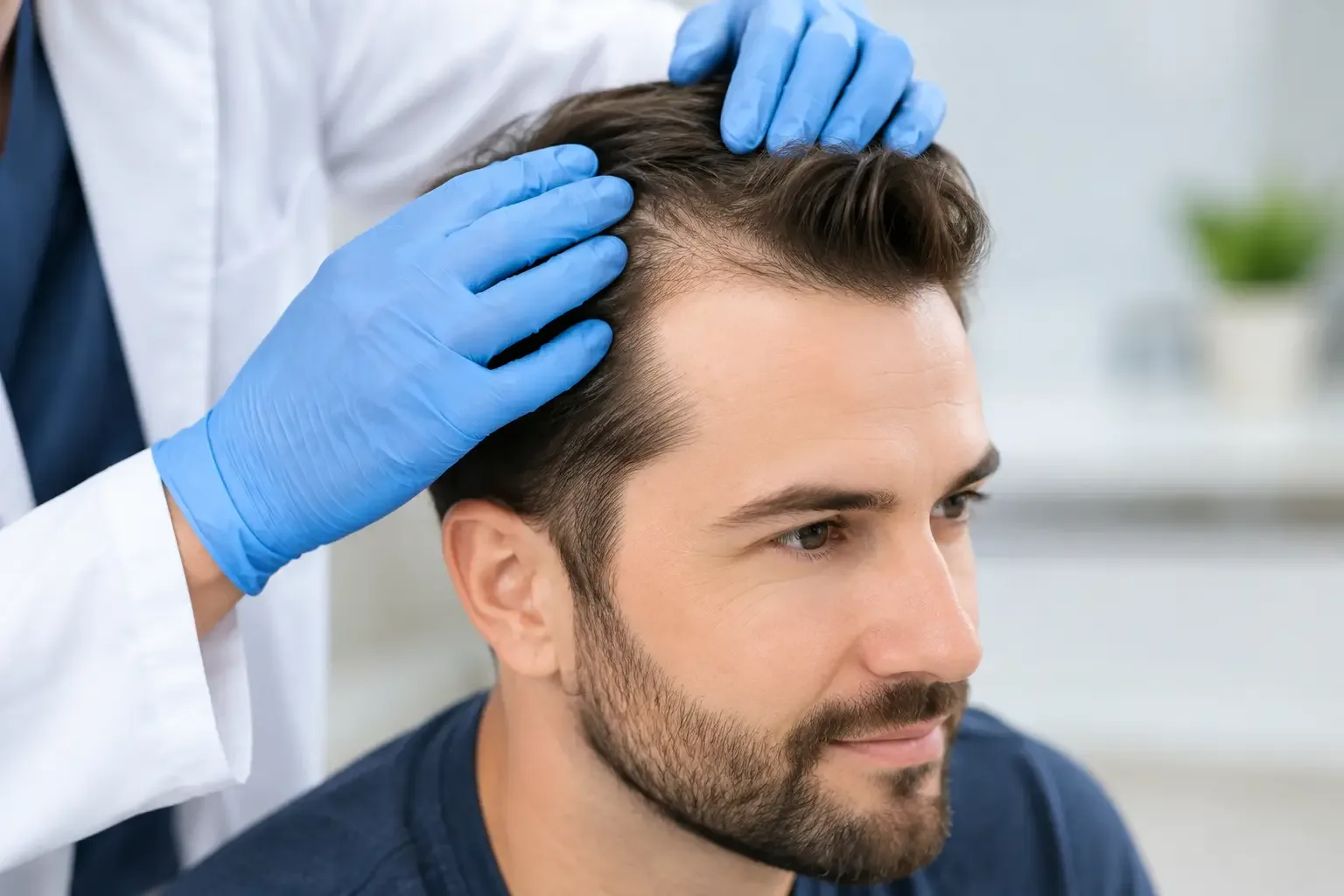
A fuller hairline can be a meaningful change. But a hair transplant is not a reset button for every form of thinning. It is a surgical redistribution of viable follicles from one area of the scalp to another, performed within the biological limits of your donor supply, scalp condition, and pattern of hair loss.
That distinction shapes every good decision that follows. The strongest results do not begin on procedure day. They begin with a precise understanding of why density changed, whether loss is still progressing, and what the scalp needs to support healthy growth over time.
A Hair Transplant Redistributes What You Have
Hair transplantation moves follicles from an area that is relatively resistant to pattern hair loss, usually the back and sides of the scalp, into areas of visible thinning. The surgeon extracts and places individual follicular units with attention to angle, direction, density, and hairline design.
The goal is not simply to add more hair. It is to create a result that belongs to your face, age, hair characteristics, and likely future pattern of loss. A low, dense hairline may look compelling in a consultation photo, yet become difficult to sustain if thinning continues behind it. Restraint is often a mark of excellent planning.
Transplanted follicles generally retain much of the biological behavior of their donor area. But surgery does not stop ongoing miniaturization in non-transplanted hair. If the surrounding hair continues to thin, the contrast between transplanted and native density can become more apparent over time.
This is why a transplant should be viewed as one part of a long-term hair strategy, not a standalone cosmetic event.
What a Hair Transplant Can and Cannot Change
A well-executed procedure can restore a receding hairline, improve frontal density, soften the appearance of a widening part, or add coverage to selected areas of the crown. It can be particularly effective when hair loss is stable, the donor area is strong, and expectations are realistic.
It cannot create unlimited density. Every scalp has a finite donor reserve. Hair texture, curl pattern, color contrast between hair and skin, shaft diameter, and the size of the thinning area all affect how full the final result appears. Coarser or curlier hair can create greater visual coverage per graft than very fine, straight hair. Dark hair against a light scalp may require a different density strategy than lower-contrast combinations.
A transplant also cannot correct the underlying driver of every shedding pattern. Diffuse shedding related to stress, illness, nutritional disruption, hormonal change, inflammation, or certain medications needs proper assessment before surgical planning. If follicles are shedding because the scalp and body are under strain, surgery may not address the reason hair quality changed in the first place.
FUE and FUT Are Techniques, Not Guarantees
Follicular unit extraction, often called FUE, removes individual follicular units. Follicular unit transplantation, or FUT, removes a narrow strip of donor tissue that is then divided into grafts. Both can produce natural-looking outcomes in experienced hands.
The better option depends on donor characteristics, hairstyle preferences, the number of grafts required, prior procedures, and how the scalp heals. FUE may leave tiny scattered scars. FUT leaves a linear scar that can be concealed by sufficient hair length. Neither method is inherently superior for every person. The planning matters more than the label.
The Donor Area Sets the Limit
The donor area is often treated as an afterthought because it is less visible. In reality, it is the foundation of every transplant plan. Overharvesting can reduce density at the back or sides of the scalp and create a patchy appearance that is difficult to reverse.
A careful assessment considers donor density, hair caliber, scalp laxity where relevant, family history, and the possibility of future loss. It also considers whether the pattern of thinning is truly stable. For someone in their twenties with active recession, preserving donor capacity can be more valuable than pursuing maximum density immediately.
This is where honest consultation matters. A responsible clinician may recommend treatment and observation before surgery, a more conservative hairline, or no procedure at all. Those are not disappointing outcomes. They are signs that the long view is being protected.
Why Scalp Health Still Matters After Surgery
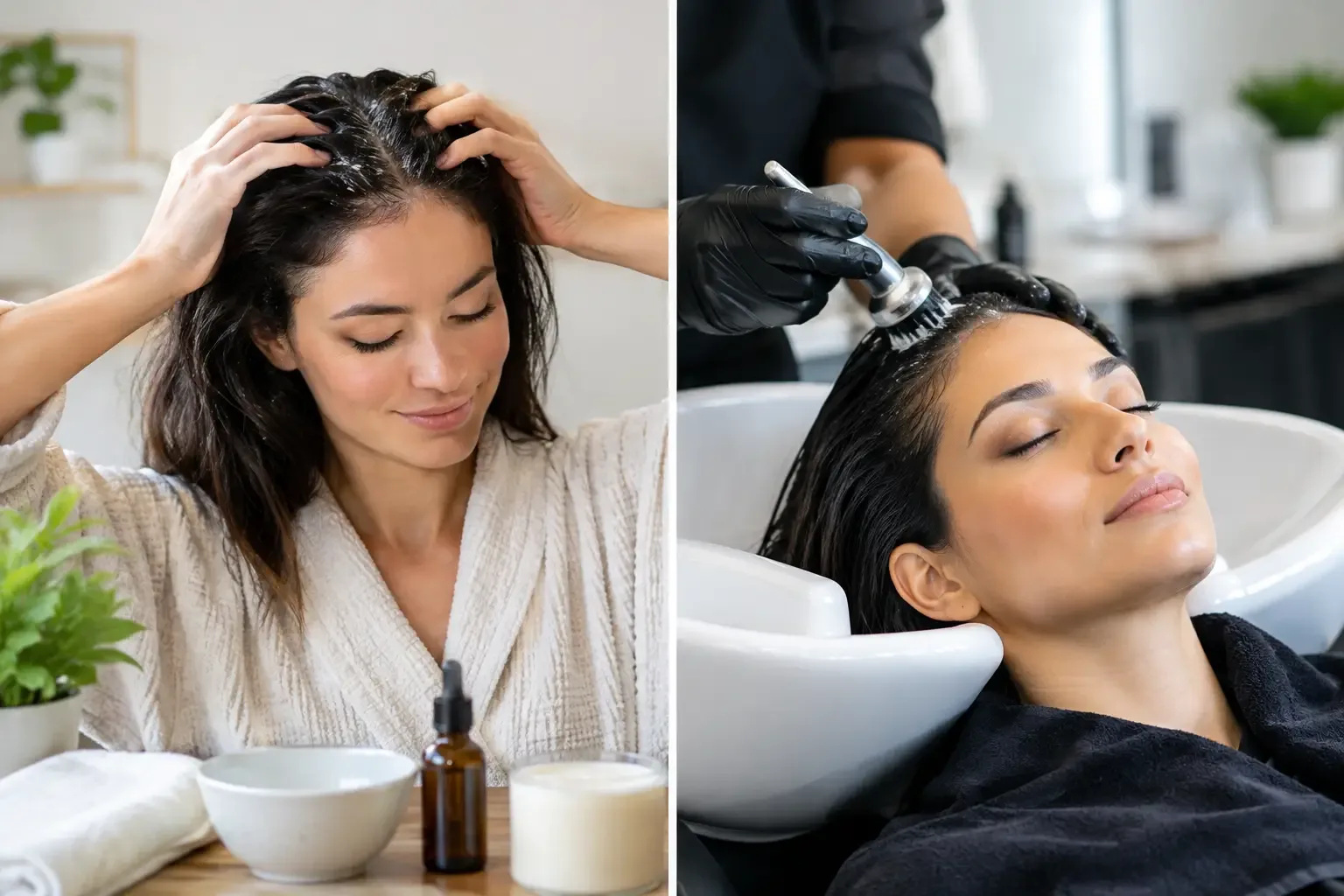
A transplanted follicle still grows in a scalp environment. Oil balance, buildup, irritation, inflammation, barrier function, UV exposure, and mechanical stress do not disappear once grafts are placed. They influence comfort, recovery, and the condition of both transplanted and existing hair.
The scalp is living skin with a demanding role. It supports follicles through recurring growth cycles while managing sweat, sebum, microbial activity, environmental particles, and repeated cleansing. In Singapore's heat and humidity, sweat and product buildup can make scalp discomfort feel more persistent, especially for people who exercise often or wear helmets, caps, or protective styling.
After the immediate post-procedure period, a scalp-first routine can help maintain a cleaner, calmer environment for the hair that remains. This does not mean aggressive exfoliation or a crowded product shelf. It means using care that responds to current scalp signals rather than treating every concern as dryness, dandruff, or hair loss.
HAAR approaches this through adaptive scalp analysis: identifying changing conditions before they become more visible, then matching care to the needs of the scalp rather than following a fixed routine. For someone considering or maintaining a transplant, that perspective is useful. Surgery addresses placement. Ongoing scalp care supports the conditions around it.
Plan for the Months After the Procedure
Hair transplantation requires patience. The early visual stage is not the final result. Transplanted hairs often shed in the weeks after surgery, while the follicles remain beneath the skin and move through a recovery phase. New growth commonly begins gradually over several months, with maturation continuing well beyond the first signs of regrowth.
Your surgeon should provide specific post-procedure instructions for cleansing, sleeping position, exercise, sun exposure, and when to resume scalp products. Follow them closely. The first days are not the time to experiment with active treatments, massage tools, heavy styling products, or intensive cleansing.
Once the scalp has healed and your clinician has cleared you, the focus shifts from protection to maintenance. This may include managing active pattern loss with medically appropriate treatment, addressing scalp inflammation or flaking, maintaining gentle but effective cleansing, and monitoring changes in density over time.
Photography can be useful here, provided it is consistent. Similar lighting, parting, angle, and frequency make it easier to distinguish true change from a good hair day. A personalized diagnostic framework can add another layer of clarity by tracking scalp condition alongside visible hair concerns.
Questions Worth Asking Before You Commit
Before choosing a clinic, ask how your donor supply is measured and protected, how the proposed hairline accounts for future loss, and who will perform each stage of the procedure. Ask for results involving patients with hair characteristics and patterns similar to yours. Ask what happens if native hair continues to thin.
You should also ask whether your current scalp condition needs attention first. Persistent itching, scaling, tenderness, sudden shedding, or a visibly inflamed scalp deserve evaluation. These signs do not automatically rule out a transplant, but they may change the timing and the plan.
The right consultation should feel specific. It should account for your age, medical history, medications, family pattern, lifestyle, grooming habits, and tolerance for long-term maintenance. Generic promises of density are not a substitute for individualized judgment.
A Better Standard for Long-Term Results
The most natural hair transplant results are rarely the most aggressive. They are the ones that respect the limits of the donor area, preserve the appearance of the scalp, and leave room for the future.
If you are considering surgery, begin by understanding your scalp and your pattern of loss with the same care you would give any long-term health decision. Healthy-looking hair is not only about where follicles are placed. It is about the environment that supports them, year after year.